I have written about mimicry before, describing why most mimics are imperfect and how some mimics imitate not only the appearance of other animals but also their sounds and behaviour. Now, I need your help with an ambitious experiment to test theories about the evolution of mimicry. Most people know that there are harmless animals that have yellow and black stripes to look like stinging bees and wasps. But did you know that there are many thousands of such species, all with different degrees of “bee-ness” or “waspiness”? The new experiment is designed to compare 56 harmless hoverflies with 42 wasps and bees to measure how similar they are. That’s 2,352 unique comparisons! This information will allow us to test exciting new ideas about the evolution of mimicry. There’s only one catch…

This particular experiment will use the human brain as a processing tool and the power of the crowd to generate data. It’s a bit like “Strictly Come Mimicking” (or “Mimicking with the Stars“, if you’re in the US): you just need to rate how similar you think the two insects appear out of 10. I’d appreciate it greatly if you could take some time to run through the experiment below. Don’t do it thinking that there is an end, though – there are 2,352 combinations, remember, and the images are randomly paired on each screen! You can access the experiment here:
www.mimicryexperiment.net
My goal is to reach 10 ratings of each pair of insects. That means a total of 23,520 ratings. I know this is a long shot, but that’s the aim, people! Please do share it far and wide! I’ll share regular updates on the blog as the ratings come in (however many or few there are!).

 Background: Urban ecosystems are becoming increasingly important as areas for biodiversity conservation, as we begin to recognise the importance of preserving natural habitat within heavily modified environments for both wildlife and human well being. Urban ponds are a key part of this network of habitats within cities, and are commonly found in parks, gardens and industrial estates. In fact, there are an estimated 2.5-3.5 million garden ponds in the UK alone, which could have an area the size of Lake Windermere!
 Background: One of the fundamental questions in ecology is “what drives changes in the numbers of species in time and space?” We can look around us today and see that there are generally many more species in the tropics than nearer the poles. However, another way in which we can look around ourselves is to delve into the fossil record to look back in time. Dani Fraser is a PhD student at Carleton University working on large-scale patterns in fossil mammal biodiversity. Dani was interested in looking at spatial patterns and how they changed through time, but rather than just calculating the number of animals living in each area at each time, we looked at the rate at which the communities changed as we moved further north. The idea is that when climates are relatively stable and warm there is little variability in climate and so there is gradual change in species as you move north. However, as the climate becomes more polarised (i.e. colder at the pole relative to the tropics) the rate of change in animal communities becomes more pronounced.
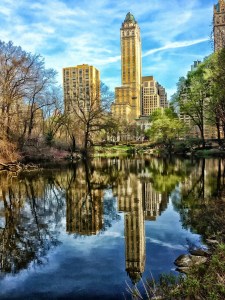 Background: When we build ponds in urban areas, they can play a number of important roles: managing floodwater, cooling the urban environment, removing pollution, improving the appearance of built-up areas and providing a habitat for wildlife. However, these different functions often require different forms of management, and so urban managers typically prioritise one or a small number of purposes. We were interested in the biodiversity value of ponds in Bradford in the UK.
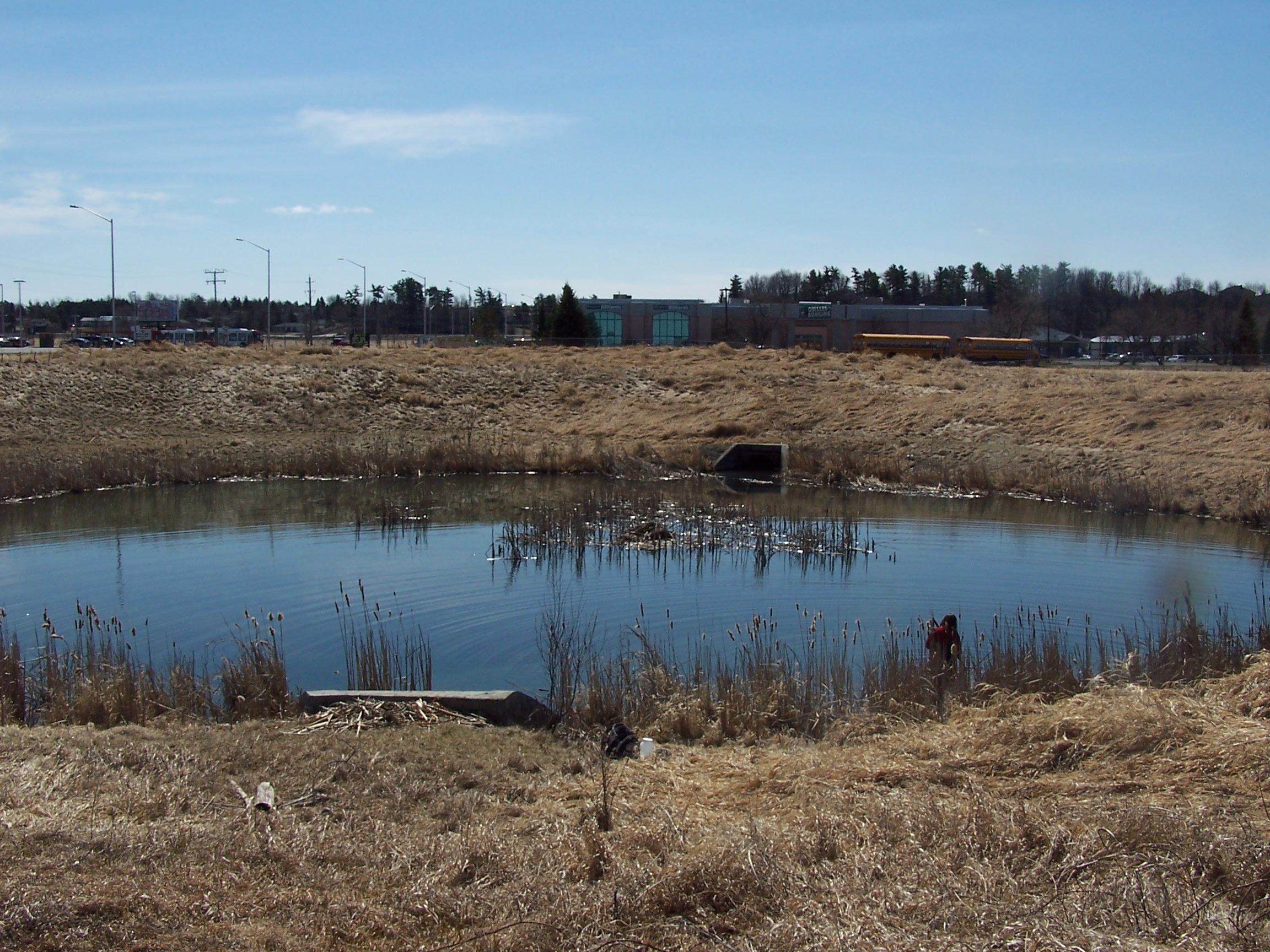
 Background: The management of water in urban areas can be a problem, because rainfall rapidly runs off impervious surfaces like pavements and roads. This means the water quickly enters rivers and streams, which then flood. City managers reduce the rate at which water enters rivers using stormwater management facilities, which often include ponds to hold back the stormwater. These ponds are usually managed just for water retention, but they could potentially form a very useful habitat for aquatic plants and animals in cities.

 Katatrepsis