Damselfly sex doesn’t always produce children, and that’s a problem for evolutionary biologists!

Background:  At the core of ecology and evolutionary biology is the concept of “fitness”, broadly defined as the number of copies of an animal’s genes it manages to leave in subsequent generations. However, biologist rarely measure this genetic fitness.  Instead, we use proxies such as the number of times an animal mated or the number of eggs an animal laid. Sometimes, we use proxies that are even further removed, such as body size (under the assumption that larger females lay more eggs).

What we did: This study compared two traditional forms of fitness measurement, daily mating rate and lifetime mating success, with a genetic measure of fitness based on finding the number of offspring each individual produced in the next generation.  We monitored a single, isolated pond over two years and individually identified all damselflies of the species Coenagrion puella, the azure damselfly.  Each individual also had a genetic sample taken and we used genetic markers called “microsatellites” to identify each individual.  When we came back the next year, we did the same thing.  This species goes through one generation per year so we knew that all the animals in the second year were the offspring of those in the first.  By comparing the genetics of the potential parents with those of the potential offspring we were able to assign offspring to parents to produce a much more accurate picture of this concept of “fitness”.  Unfortunately, what we found was that our behavioural measurements did not reflect this more accurate measure of fitness.

Importance: Since the concept of fitness is so important to evolutionary biology, it is important to test the assumptions of the studies that have sought to measure it.  We have demonstrated that some of those previous studies were not using particularly reliable proxies for fitness.  However, we have provided a case study of a potential method for avoiding these problems: by directly genotyping and assigning parents to offspring in the field we can get a much clearer picture of what “fitness” really means.


This is part of a series of short lay summaries that describe the technical publications I have authored.  This paper, entitled “Field estimates of reproductive success in a model insect: behavioural surrogates are poor predictors of fitness”, was published in the journal Ecology Letters in 2011. You can find this paper online at the publisher, or on Figshare.

Image credit: One of mine, CC-BY 3.0
It’s hard to predict how many species a pond might contain…

Background:  Ponds have been identified as a very important habitat in the landscape.  They enhance regional biodiversity, help control floodwater, reduce pollution in run-off from agricultural and urban land, and provide greenspace and biodiversity in urban environments.  However, because of their small size (typically less than two hectares), they have been neglected by scientists until the last couple of decades.

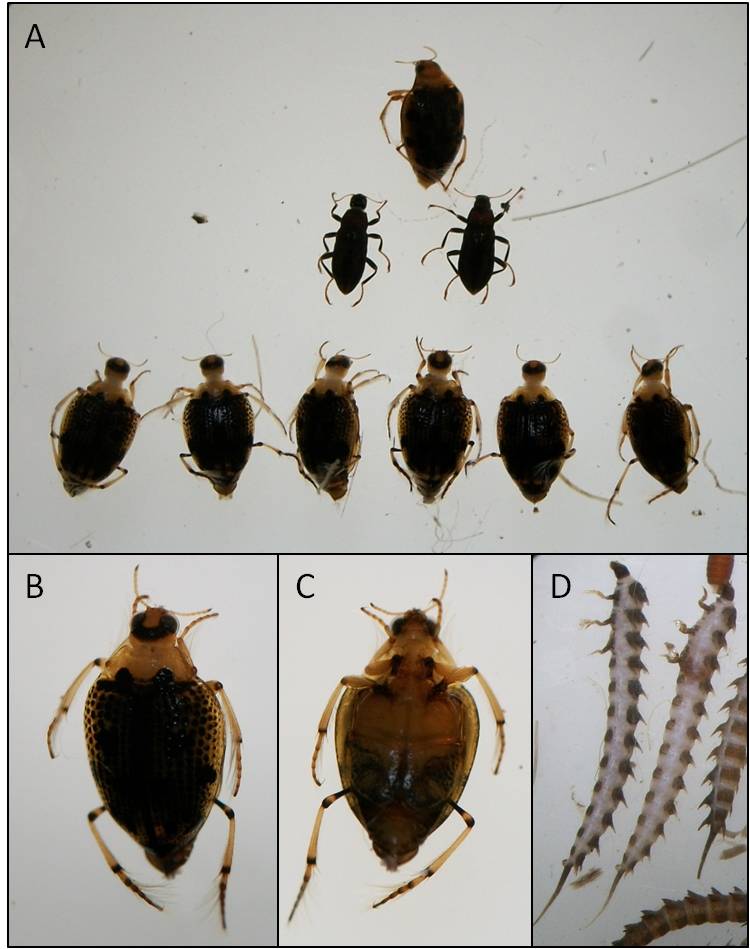
What we did: This study used a large dataset of 454 ponds that had been surveyed in the north of England to identify all of the invertebrate and plant species that inhabited them. A wide range of physical, chemical and biological variables were also measured and, as the title of the paper suggests, we investigated which of these variables were related to the species richness of different plant and animal taxa. We were able to predict a reasonable amount of the diversity of invertebrates in general, but predictions varied between groups of invertebrates. In general, more shade and a history of drying up reduced the diversity of all groups.

Importance: It has been shown that landowners and managers tend to manage ponds and other natural resources using “received knowledge”. in other words, there is little evidence base for such management.  Our study demonstrated a few important relationships which can be used to inform this kind of management.


This is part of a series of short lay summaries that describe the technical publications I have authored.  This paper, entitled “Environmental correlates of plant and invertebrate species richness in ponds”, was published in the journal Biodiversity and Conservation in 2011. You can find this paper online at the publisher, or on Figshare.

Image credit: That’s one of mine, CC-BY 3.0.

Ponds are dynamic habitats, which makes it tough to conserve biodiversity…

Background:  When an area is designated as a site for conservation or special scientific interest that is usually because one or more species of interest have been found or the community as a whole is unique or exceptional. However, the implicit assumption in this approach is that if you come back tomorrow then those species or that community will still be present. If the habitat is dynamic, with frequent population-level extinctions and colonisations, then it may be that this assumption does not hold. Pond ecosystems represent one case where the habitats are small and relatively easily affected by external variables and which may, as a result, vary in their conservation value over time.

What we did: Andrew Hull and Jim Hollinshead have been monitoring ponds in Cheshire (northwest England) for almost 20 years. A set of 51 ponds were surveyed in 1995/6 and again in 2005, meaning that we can test whether or not over this 10-year period there was any change in the conservation value of the ponds. Pond surveys recorded all plant and macroinvertebrate (i.e. invertebrates larger than about 1mm, which was the size of the mesh of the net) species in the ponds and we compared (i) the diversity, and (ii) the conservation value of the ponds between the two surveys. Plants showed similar levels of diversity in both surveys, so highly-diverse ponds in the first survey remained that way in the second. However, invertebrate diversity was not correlated between surveys, meaning that species rich ponds in the first survey did not necessarily remain that way. For both groups there was not correlation between conservation value (calculated based on the rarity of the species in the community) in survey 1 compared to survey 2.

Importance: Ponds are highly variable ecosystems and that is one of the reasons that they support such a wide range of species on a landscape scale. However, it seems that this variability may make it difficult to conserve them adequately, since conservation value is changing over time. This finding supports the conservation of pond clusters, rather than individual sites, which are more likely to contain a stable species pool.


This is part of a series of short lay summaries that describe the technical publications I have authored. This paper, entitled “Temporal dynamics of aquatic communities and implications for pond conservation”, was published in the journal Biodiversity and Conservation in 2012. You can find this paper online at the publisher, or on Figshare.

Image credit: Alison Benbow, CC BY 2.0, http://bit.ly/1l35Tdu

Drones and quadcopters in conservation

I’ve had a bit of a go at using unmanned aerial vehicles (UAVs) in the past (see this little write-up) but with mixed success. Part of the problem is that there has not been any consistent attempt to develop a technology that can be used for environmental or ecological research – just a bunch of scientists trying to MacGyver existing equipment. Now there’s Conservation Drones, who seem to be taking a slight more systematic approach, designing their own drone, spreading the knowledge around, and starting up PhD research projects to develop the tech further. Here’s an early demo of one of their models:

Less common species tend to have more parasites

Background:  Parasites and the individuals that they attack (called “hosts”) often have a long evolutionary history of interaction. This history often plays-out as an “arms race” where the parasite finds a new way of attacking the host and the host then evolves a defence against that attack, followed by subsequent evolution by the parasite. Not only this, but species of parasites (such as the aquatic mites and protozoa that I work on) that exploit many host species can differentially affect those different hosts. In this study, we were interested in how parasitic protozoa affect closely related damselfly species that differed in their distributions.

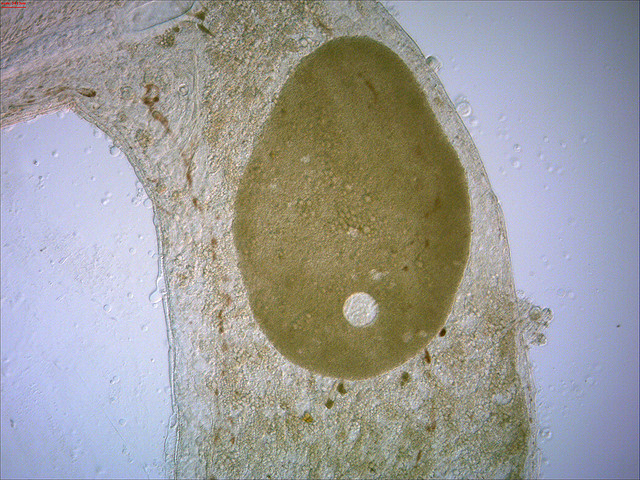
What we did: Julia Mlynarek, a PhD student at Carleton University, collected a large number of damselflies from a number of sites around eastern Ontario. The species were grouped into pairs so that we could compare between species from the same genus.  She dissected these to find the number of protozoa (like the one shown above) in guts of each animal. We found that species with smaller geographical distributions tended to have more protozoan parasites than closely related species with larger distributions.

Importance: Explaining how parasites affect their hosts is a big question spanning ecology and evolutionary biology. These results suggest that there might be a combined effect of (i) shared parasites due to evolutionary history, and (ii) varying resistance due to different exposure across geographical ranges.


This is part of a series of short lay summaries that describe the technical publications I have authored.  This paper, entitled “Higher gregarine parasitism often in sibling species of host damselflies with smaller geographical distributions”, was published in the journal Ecological Entomology in 2012. You can find this paper online at the publisher, or on Figshare.

Image credit: Christophe Laumer, CC BY 2.0, http://bit.ly/1rrvyzt

Leopard dive bomb

Here’s a fascinating example of a leopard hunting by hurling itself from a tree:

Leopards are hugely adaptable creatures and feed in a variety of ways on pretty much anything they can catch and kill from dung beetles to gorillas. Often on the African savannah they will stalk prey around dawn and dusk, pouncing from short range. It isn’t clear whether this was a regular hang out for the leopard or whether it happened to be napping in the tree when lunch walked along…

H/T Richard Conliff at Strange Behaviours

British dragonflies are emerging earlier in the year under climate change

Background: A variety of responses to climate change have been detected in a variety of taxa.  Among these is a change in phenology – the timing of the life cycle (like the emergence of an adult dragonfly from its larval case as shown on the right). Since some species use temperature as a cue for when to develop, as the environment warms there is a signal of earlier development in these species.

What we did: I analysed an extensive dataset of sightings of dragonflies and damselflies (Odonata) over a 50-year period in the UK.  These 450,000 sightings were of around 40 species and provided a detailed record of dates on which different Odonata species were emerging from their aquatic habitats.  I found that there was a significant shift towards earlier emergence which was consistent with that observed in terrestrial species.  I further demonstrated that there was a difference between two groups of species that varied in what stage they over-wintered.  Those species that sat in the water over winter as eggs did not show a response to climate change while those that were larvae over winter did show a response.  I infer from this that the response to climate change is caused by a decline in mortality associated with cooler temperatures in the more vulnerable larval stages.

Importance: As I mention above, a number of studies have demonstrated an effect of climate change on the phenology of animals and plants.  This study showed that the signal was present even for animals that occupy aquatic habitats, suggesting that temperature changes influences aquatic and terrestrial ecosystems in much the same way.


This is part of a series of short lay summaries that describe the technical publications I have authored. This paper, entitled “Historical changes in the phenology of British Odonata are related to climate”, was published in the journal Global Change Biology in 2007 (my first paper!). You can find this paper online at the publisher, or on Figshare.

Image credit: Sally Crossthwaite, CC BY-NC-ND 2.0, http://bit.ly/1q6HYtH

Who would win in a fight between a rhino and a tiger?

tigerrhinoI got an email from our university press officer earlier this week asking “whether we have a ‘zoologist who could participate in a light-hearted discussion about who would win in a fight between a tiger and a rhino on Friday morning’.” The request was from the local BBC Radio Leeds team who wanted to break up their coverage of the Leeds Rhinos vs Castleford Tigers rugby league Challenge Cup final preparations with some light-hearted digressions. I have resolved to take a more active part in science communication (including this blog), because I see that as a fundamental part of my job (even if it is little-rewarded…) and so I agreed to do it.Read More »

Why I blog (occasionally!)

There has been a lot of discussion over the merits of academics blogging (see here, here, here, here, here and here). The positive arguments seem to be that:

  1. It’s good outreach, allowing a flexible platform for communication of science
  2. Blogs allow rapid responses and reporting on research
  3. Online profiles are important and blogs can be a strong foothold in internet-space
  4. Writing for a non-technical audience is good practice for science communication

The negative arguments seem to be that:

  1. It doesn’t count in academic terms (it’s not a paper, a grant, or a lecture)
  2. Sometimes tenure panels might see blogging as a waste of time
  3. There’s the danger of “upsetting” people.

Well I think it counts (even if my colleagues disagree), we don’t have tenure in the UK, and I don’t mind upsetting people, so there’s no good reason for me not to blog! I was letting it drop off a bit, but all this discussion has encouraged me to start up again. One of the problems is that I lacked a blogging strategy, which meant that I only shared what I (A) found interesting, and (B) found time to write about. Most of my problem was that I found interesting topics and spent too much time on too few, too niche issues. That’s going to change. Here’s the plan:

  • I’m going to post lay summaries of each of my publications.  That’s 25 to start with, and I’ll add more as I go along. I see that as a vital part of science communication, and I’ll link them back to my publications page on my website.
  • I have recently been immersing myself in Twitter which has led to my discovering a lot more interesting (and sometimes plain weird) papers and articles. This will be a key (near-bottomless) source for new ideas, but I’ll try to keep to a theme.
  • The main topicsare going to be
    • General science things
    • Entomology news and views
    • Education and technology
    • Specific posts about my research
  • Finally, I’m going to write in short form now – no more monthly long reads. 500 words max, and always with an image or video. It was the length and detail that was killing my productivity, and nobody reads those longreads, anyway!

I am hoping that that is going to provide a sustainable flow of content over the next few months, and I’ll reevaluate at Christmas.  Happy reading!


Image credit: Cortega9, CC-BY-SA 3.0, http://bit.ly/1oiVIwr