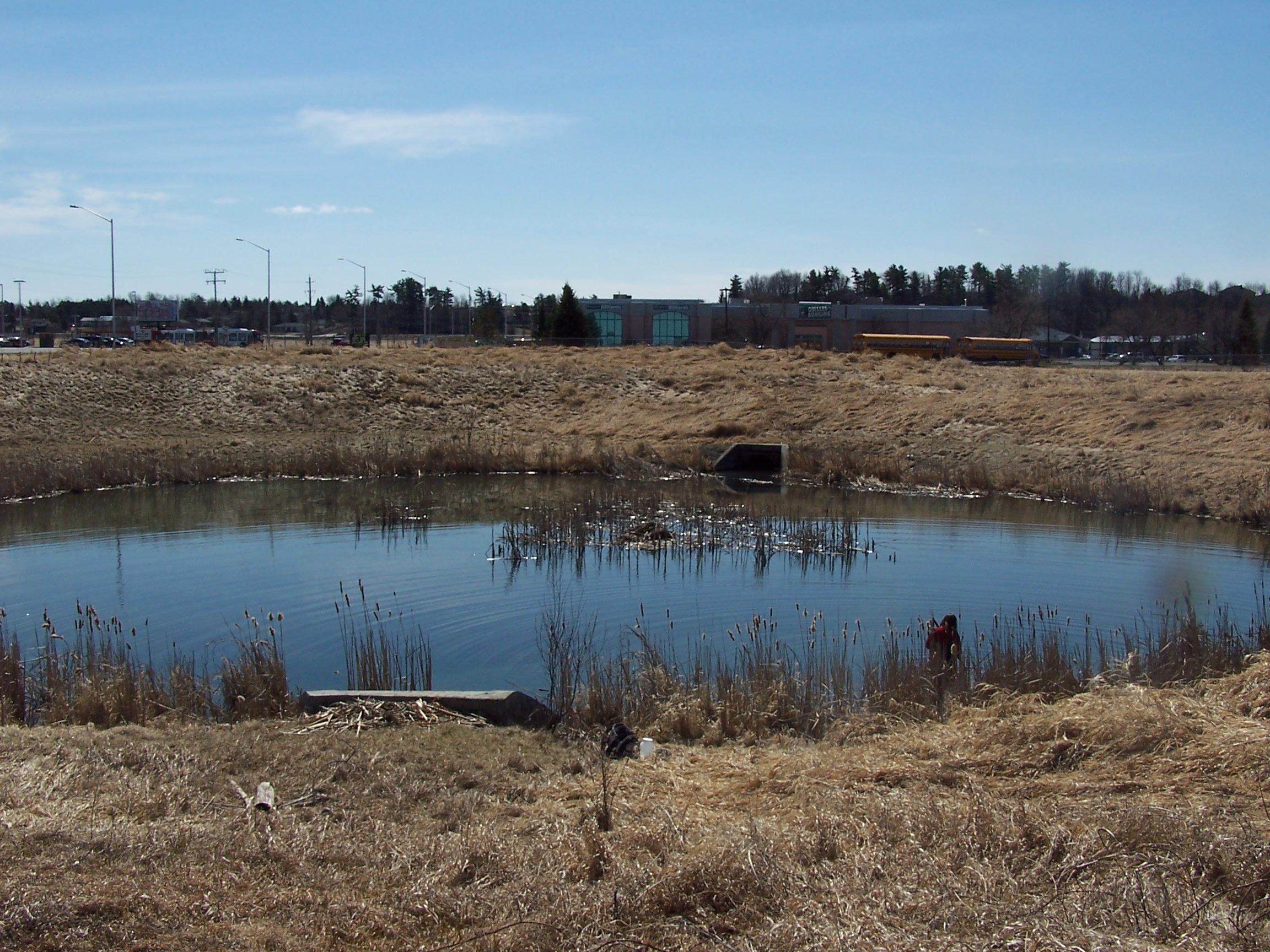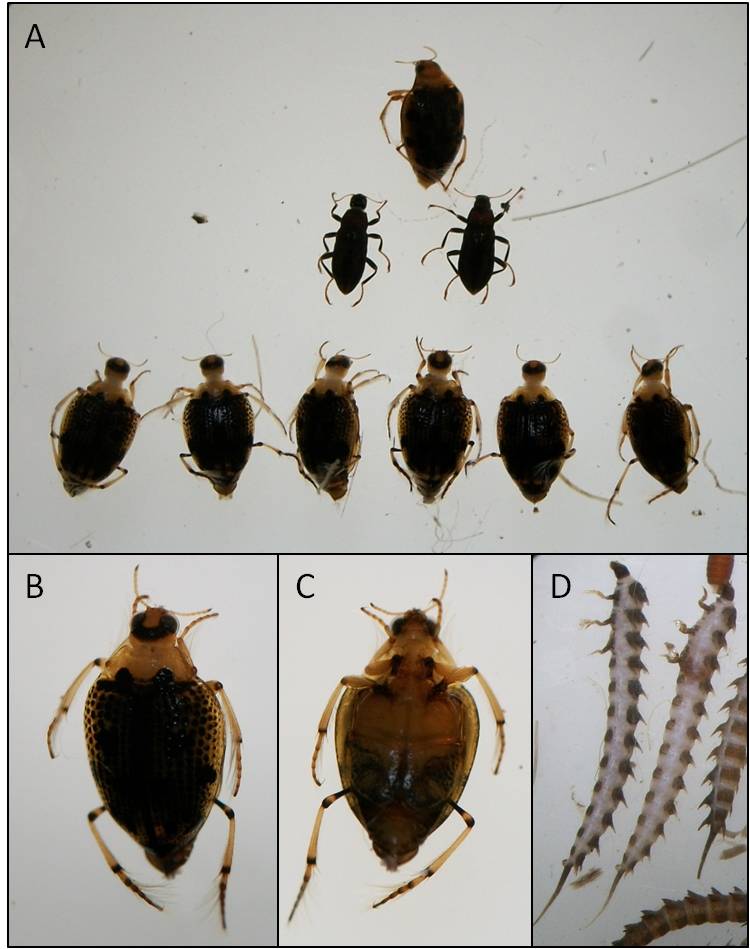
It’s hard to predict how many species a pond might contain…

Background:  Ponds have been identified as a very important habitat in the landscape.  They enhance regional biodiversity, help control floodwater, reduce pollution in run-off from agricultural and urban land, and provide greenspace and biodiversity in urban environments.  However, because of their small size (typically less than two hectares), they have been neglected by scientists until the last couple of decades.

What we did: This study used a large dataset of 454 ponds that had been surveyed in the north of England to identify all of the invertebrate and plant species that inhabited them. A wide range of physical, chemical and biological variables were also measured and, as the title of the paper suggests, we investigated which of these variables were related to the species richness of different plant and animal taxa. We were able to predict a reasonable amount of the diversity of invertebrates in general, but predictions varied between groups of invertebrates. In general, more shade and a history of drying up reduced the diversity of all groups.

Importance: It has been shown that landowners and managers tend to manage ponds and other natural resources using “received knowledge”. in other words, there is little evidence base for such management.  Our study demonstrated a few important relationships which can be used to inform this kind of management.


This is part of a series of short lay summaries that describe the technical publications I have authored.  This paper, entitled “Environmental correlates of plant and invertebrate species richness in ponds”, was published in the journal Biodiversity and Conservation in 2011. You can find this paper online at the publisher, or on Figshare.

Image credit: That’s one of mine, CC-BY 3.0.

A defense of “denial” and “debate” on climate change

LeedsSkepticsTalkI gave a talk at the Leeds Skeptics last night – part of a mini-tour talking about “Denying the Evidence: Why People Reject Science and What We Can Do About It“. During the Q&A I was asked whether using the term “denier” was an attempt to shut down the debate over climate change. These are two interesting issues which I’ll take one at a time.Read More »

British dragonflies are emerging earlier in the year under climate change

Background: A variety of responses to climate change have been detected in a variety of taxa.  Among these is a change in phenology – the timing of the life cycle (like the emergence of an adult dragonfly from its larval case as shown on the right). Since some species use temperature as a cue for when to develop, as the environment warms there is a signal of earlier development in these species.

What we did: I analysed an extensive dataset of sightings of dragonflies and damselflies (Odonata) over a 50-year period in the UK.  These 450,000 sightings were of around 40 species and provided a detailed record of dates on which different Odonata species were emerging from their aquatic habitats.  I found that there was a significant shift towards earlier emergence which was consistent with that observed in terrestrial species.  I further demonstrated that there was a difference between two groups of species that varied in what stage they over-wintered.  Those species that sat in the water over winter as eggs did not show a response to climate change while those that were larvae over winter did show a response.  I infer from this that the response to climate change is caused by a decline in mortality associated with cooler temperatures in the more vulnerable larval stages.

Importance: As I mention above, a number of studies have demonstrated an effect of climate change on the phenology of animals and plants.  This study showed that the signal was present even for animals that occupy aquatic habitats, suggesting that temperature changes influences aquatic and terrestrial ecosystems in much the same way.


This is part of a series of short lay summaries that describe the technical publications I have authored. This paper, entitled “Historical changes in the phenology of British Odonata are related to climate”, was published in the journal Global Change Biology in 2007 (my first paper!). You can find this paper online at the publisher, or on Figshare.

Image credit: Sally Crossthwaite, CC BY-NC-ND 2.0, http://bit.ly/1q6HYtH

What’s the use of wetlands?

The black bog had him by the feet; the sucking of the ground drew on him, like the thirsty lips of death. […] he tossed his arms to heaven, and they were black to the elbow, and the glare of his eyes was ghastly. […] Scarcely could I turn away, while, joint by joint, he sank from sight.

Lorna Doone, R.D. Blackmore

A view over “Doone Valley”

What do you think of when you think about wetlands: ponds, lakes, streams, rivers? Humankind needs water to drink, irrigate crops, and clean ourselves.  However, our view of water tends to focus on the negatives: drowning, dirt, disease, and decay.  Words like “bogged-down” and “swamped” have entered everyday use. In some ways Carver Doone’s plight represents the fears that we have about wetlands. But I want to make the case that these wetlands are misunderstood heroes of the natural world.
Read More »

Our Skeptical Inquirer article has been published!

20130428_001544

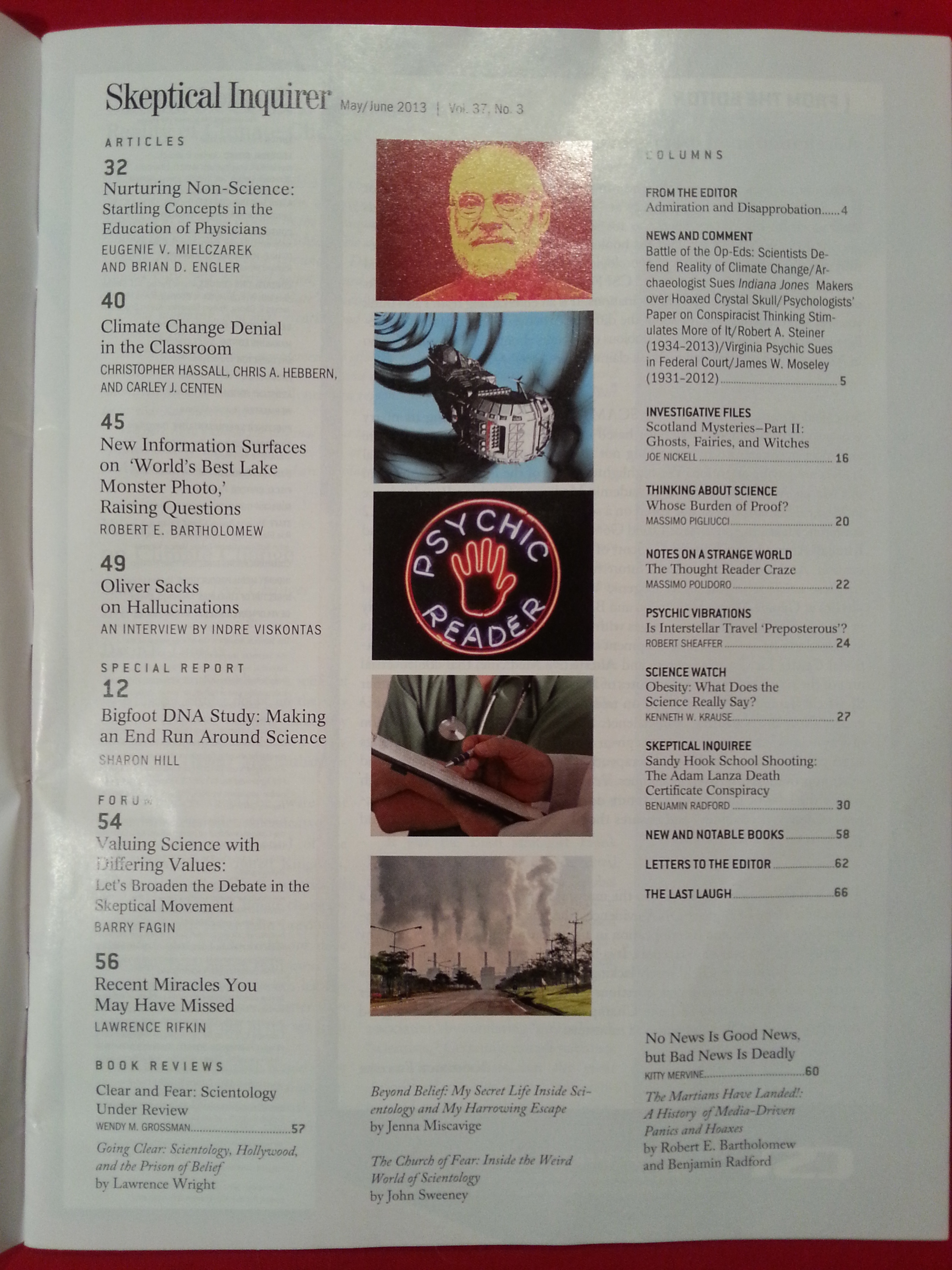
The Skeptical Inquirer piece on climate change denial in universities that I wrote (along with my co-conspirators) has just been published in the May/June 2013 print edition!  It’s a bit strange to be listed alongside people like Ben Radford, Sharon Hill, Joe Nickell, Massimo Pigliucci and Massimo Polidoro, but we’re all delighted that Ken Frazier and the rest of the SI team saw enough value to accept our little piece.  Many thanks to them all for a smooth and efficient editorial process.  I’m afraid that there’s no online version yet (they don’t publish all the print articles online, and those that they do publish online come along a month or two after the print edition) but I’ll post a link if/when it does appear.  All the more reason to go and subscribe to the print version!