“We should be extremely cautious in concluding that an organ could not have been formed by transitional gradations of some kind. Numerous cases could be given amongst the lower animals of the same organ performing at the same time wholly distinct functions; thus in the larva of the dragonfly… the alimentary canal respires, digests and excretes.”
A few colleagues and I recently had a paper published in Nature on “A comparative analysis of the evolutionary of imperfect mimicry”. Those of you fortunate to have a Nature subscription can read the paper here. Alternatively, you can email me and I’ll send you a copy. Unfortunately, I can’t make the paper available due to issues with copyright from Nature (see elsewhere for details of scientists’ love-hate relationship with publishers…) but I can summarise the paper here. Read More »
I had the pleasure this evening of introducing Prof Root Gorelick to give a lecture to the local Centre for Inquiry group here in Ottawa. I have seen him give a number of relatively provocative talks at conferences and I knew his engaging style and fascinating subject matter would make for an interesting evening. Some people have asked me to summarise the talk as they couldn’t make it, so here is my best attempt while it is still fresh in my mind… Read More »
It’s Saturday, my first day with nothing to do for about three weeks and how do I decide to spend it? Writing a literature review of sex-specific play behaviour in humans… Read More »
Carl Zimmer wrote an interesting piece recently on “hardy relicts”. “Relict” species or populations are those that are left behind as all the other populations or individuals of a species die off. Read More »
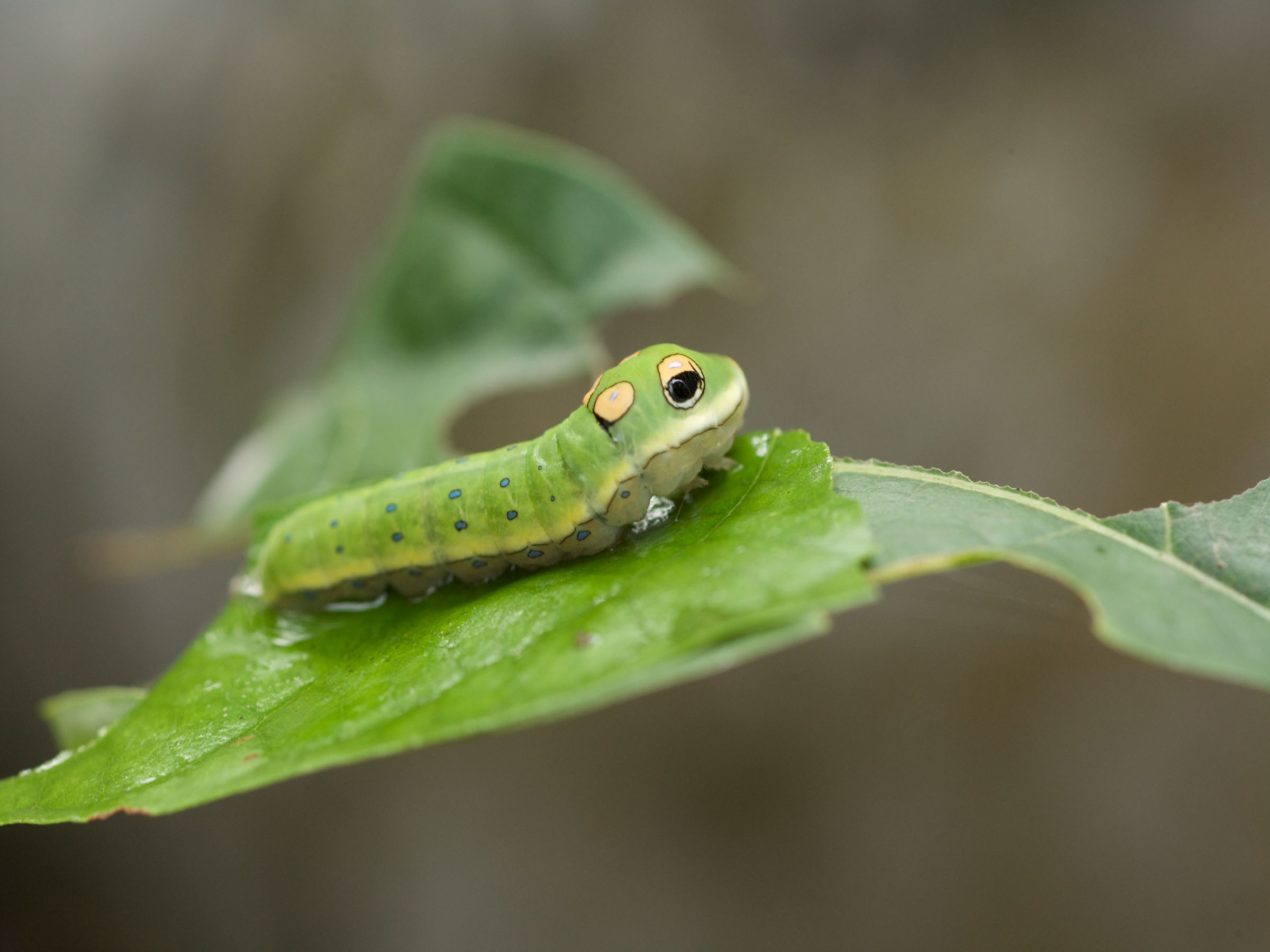
For the past 18-or-so months, Tom Hossie, a PhD student working in the same lab as me, has been carrying out research into caterpillar eyespots. This is an absolutely fascinating area of research, not only because it involves looking at pretty animals, but because there are so many unanswered questions to investigate. Here’s an example of the kind of caterpillar that sparked his interest in this topic:
Papilio troilus caterpillar, photo by Ryan Hagerty
The little guy even looks like he has eyelids! Tom is seeking to answer as many questions as possible during his 3-4 year PhD and has made a roaring start with an extensive field study that will hopefully be published soon (I’ll blog about that once it is in print!). I’d highly recommend checking out his blog (http://caterpillar-eyespots.blogspot.com) for more details about the project and eyespots in general! He has lots of excellent photos from his current trip to Costa Rica.
I posted a few days ago about a trip that I took down to the Polaris Sci-Fi Convention in Toronto. Since I have a full 45 minute talk all laid out I figured I would give a little bit more detail about the topic. Read More »
While some people were off enjoying the sights and sounds of Las Vegas at TAM9, myself and three other members of the Committee for the Advancement of Scientific Skepticism (which bears the much-needed acronym of CASS) were in Toronto having our own little skeptical conference. This is my brief summary of the talks.


 Katatrepsis