
This week’s odonate of the week is Pyrrhosoma nymphula, the large red damselfly (we call a spade a spade in the UK…). The male is the first photo (note the small, black genital claspers at the tip of the abdomen) and the female is the second photo (note the rounded tip to the abdomen with the short ovipositor projecting from the tip).
A trip to Pink Lake, Gatineau Park

A few weeks ago I cycled up into Gatineau Park, just outside of Ottawa in Quebec. It’s nice having wilderness this close to the city, even if I don’t use it enough! My target was Pink Lake, about 8km inside the park boundary and that made for a 30km round trip. It’s hard work getting there (the lookout in the photo is about 120m or 400 feet above when I started) but good fun free-wheeling most of the way home. I didn’t know anything about the lake (there are a lot of them around and I assumed it was just like the others). However, when I saw the interpretation signs at the site I noticed it was “meromictic”. What this means is that the lake waters never entirely mix and it produces a fairly special environment for life. The signs gave some information about the biological implications which I thought I would share.
Debunking Chris Hassall
Occasionally I google myself. A slightly narcissistic habit, I know, but we all do it… Satisfyingly, most of the results are about me (and rightly so!). However, there is one result that always bugs me: “Welcome to Chris Hassall · a LifeSuccess Consultant“. Not only does he appear on the first page of results, but he also has the domain name “www.chrishassall.com”! So I perused his site and wasn’t impressed.
Read More »
Evolution of superstition
I posted a few days ago about a trip that I took down to the Polaris Sci-Fi Convention in Toronto. Since I have a full 45 minute talk all laid out I figured I would give a little bit more detail about the topic.
Read More »
Project pigeon
I mentioned in an earlier post the experiments of BF Skinner on pigeons. As I said then, the core of his research was experimenting with learning in animals and the extent to which certain behaviours could be “conditioned”. Now, scientists are constantly asked for examples of applications of their research. Indeed, it is becoming increasingly difficult to obtain funding for projects that do not have some form of tangible output. Faced with this question, Skinner came up with an innovative application of pigeon learning which became known as “Project Pigeon” (or “Project Orcon” for “organic control”).
Read More »
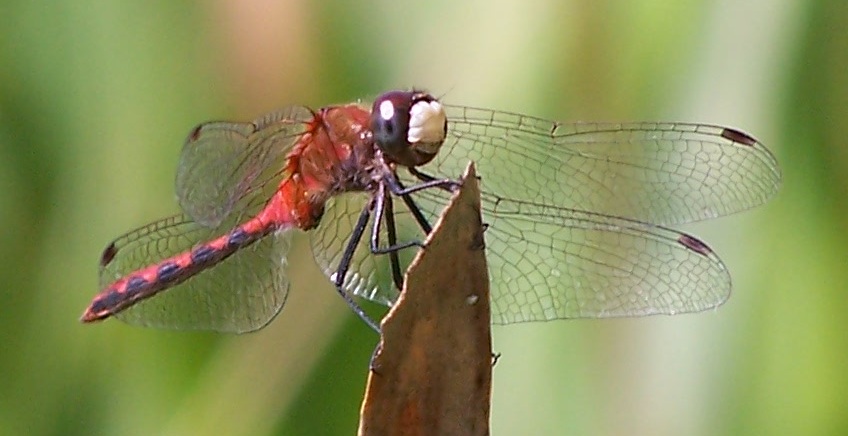
Odonate of the week: Sympetrum obtrusum
This week’s odonate of the week is Sympetrum obtrusum, the white-faced meadowhawk.
Read More »
In search of the Chupacabra
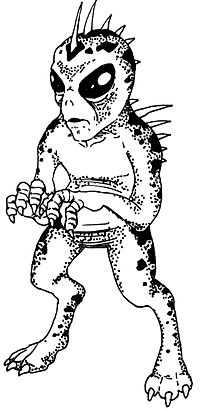
In the third of an expanding series on “cryptids” (those animals which are thought by some to exist but have never been conclusively documented), I thought I would cover the third best-known cryptid: the chupacabra. Literally, chupacabra means “goat sucker” in Spanish and it was first reported in Puerto Rico in 1995. This makes it one of the most recent cryptids to have been reported. Confined almost entirely to Latin America, there have been a large number of sightings since 1995. The original sighting, in the Puerto Rican town of Canóvanas, reported a small creature with reptilian skin, large eyes and rainbow spines down its back. However, sightings since have varied in their descriptions and more recent sightings have described dog-like animals with no fur and exuding a foul smell. Other similar sightings have the creature as large as a bear (these are from Russia and the Phillipines). The other noted feature of these sightings is the finding of dead animals, drained of their blood (hence the name “goat sucker”).
Read More »
The problem of hierarchical problems
I was at the CFI Ottawa Unsermon this morning (which I highly recommend for brunch and intelligent conversation!) and got into a debate justifying the actions of CFI. The discussion was sparked by this sentiment: “There are big issues (health, environment, economy) that need to be solved. CFI takes on smaller projects that do not address those bigger issues and so is not worth investing in.”
Read More »
Odonate of the week: Coenagrion puella
This week’s odonate of the week is Coenagrion puella. This is a European species that is very close to my heart. I worked on it during my PhD at the University of Liverpool and it has treated me well by producing some nice publications over the years.

A Canadian perspective on clinical trial registration
When pharmaceutical companies wish to market a drug, there is a legislative requirement that they first demonstrate efficacy and safety. The pharmaceutical companies do this by contracting out clinical trials. The history of these trials is one of refinement over time with the most recent trials meeting rigorous requirements for blinding (i.e. neither the participants nor the experimenters know who’s getting what kind of treatment) and randomisation (i.e. random allocation of participants to the different treatments).
I was listening to an old Skeptics Guide to the Universe (SGU) podcast from October 13th 2010 which featured an interview with Ben Goldacre, a psychiatrist, medical writer and author of the excellent blog/column/book Bad Science. He made an argument that resonated so strongly that I have to reproduce it in its entirety:
Read More »
 Katatrepsis