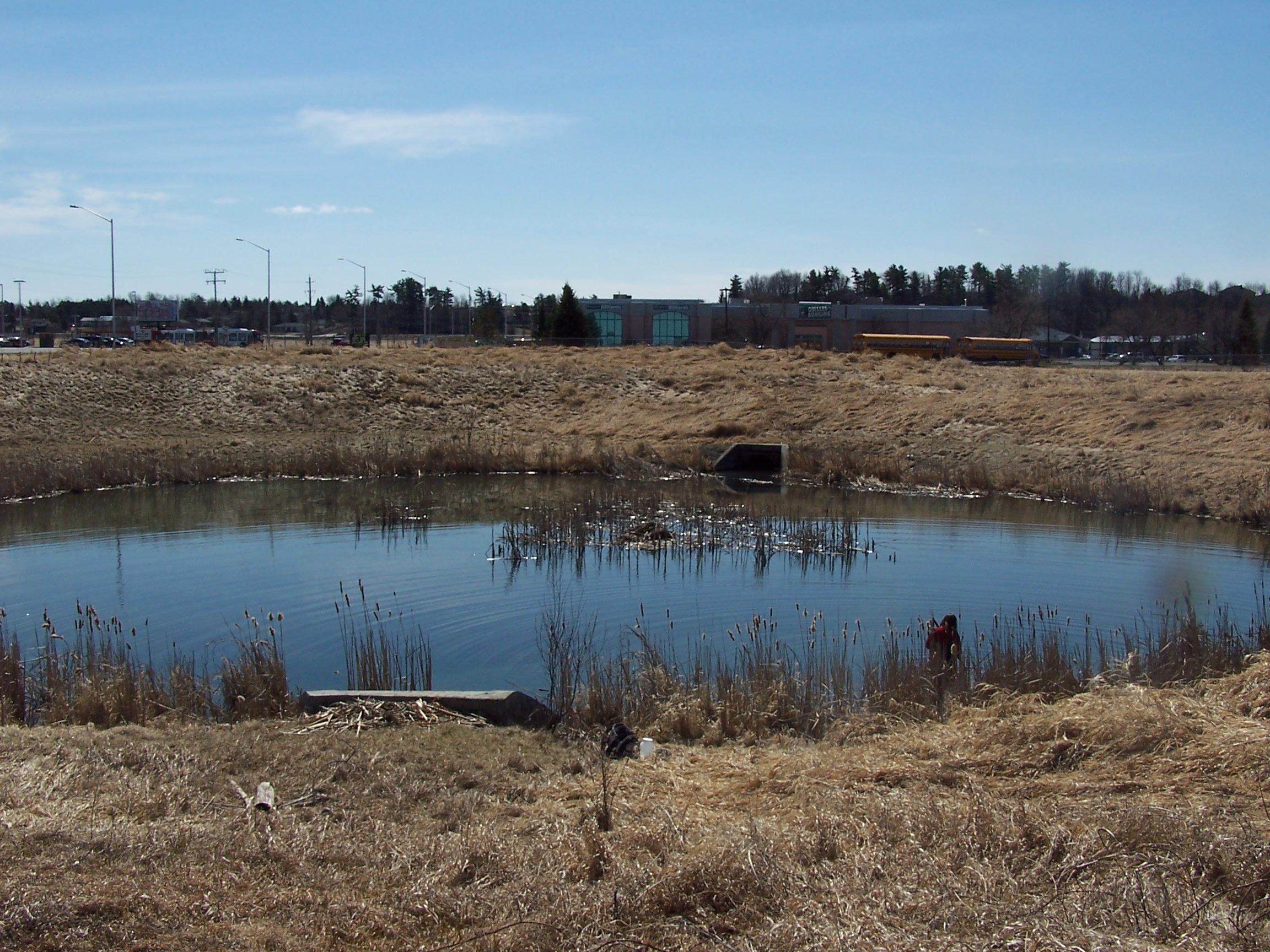
The black bog had him by the feet; the sucking of the ground drew on him, like the thirsty lips of death. […] he tossed his arms to heaven, and they were black to the elbow, and the glare of his eyes was ghastly. […] Scarcely could I turn away, while, joint by joint, he sank from sight.
Lorna Doone, R.D. Blackmore
A view over “Doone Valley”
What do you think of when you think about wetlands: ponds, lakes, streams, rivers? Humankind needs water to drink, irrigate crops, and clean ourselves. However, our view of water tends to focus on the negatives: drowning, dirt, disease, and decay. Words like “bogged-down” and “swamped” have entered everyday use. In some ways Carver Doone’s plight represents the fears that we have about wetlands. But I want to make the case that these wetlands are misunderstood heroes of the natural world. Read More »
A graduate student yesterday told me that they were despondent over not having published more during their PhD. I was just pleased that they were considering it at all, because the British PhD culture is still (to a certain extent) fixated on the production of a thesis (which nobody will read) rather than academic journal articles. I thought I would take a few minutes to lay out the reasons that I think you should be trying to publish whatever you can whenever you can:Read More »
I just heard about this brilliant initiative at Sharrow School in Sheffield (less than a mile from the hospital where I was born!). One of the school buildings has a roof garden which was specifically designed to represent the various habitats that can be found in the local area. The garden was so successful that the school was able to have it designated as a local nature reserve under UK law. You can see more details of the school and the building (including the description of the LNR itself and the justification for the designation). The roof garden was organised by the Green Roof Centre, an organisation based within the University of Sheffield, when building was created in 2007 during the merger of two local schools to form Sharrow School.Read More »
The wonderful world of anecdotes is often scorned by scientists. Leading journals demand tightly controlled studies with a priori justifications, and this approach has sidelined some of the more interesting and peculiar aspects of academic. For example, I have a couple of articles that describe trends through space and time in the presence of dragonflies using databases that were collected by enthusiasts in the field. These kinds of observations are the bedrock of natural history, for example, where initial anecdotes spur pilots studies which result (if the data is supportive) in fully-fledged grants. Another important anecdote was recorded on 5th June 1995, and it has been immortalised with its own (admittedly slightly niche) holiday. You can see Dr Kees Moeliker talking about his homosexual necrophiliac mallard here:
I have recently (and luckily) been successful in applying for grant funding. I’ll write more about the grant itself later, but I wanted to highlight something that I see as far more significant. Applying for research funding is absurd and I think I’ve come up with an analogy to drive this home.
Imagine that you are an athlete (more difficult for some of us than for others). You have decided to dedicate your life to your sport and have entered a competition to pit yourself against the best in the country. The trouble is that the sport is poorly defined. You turn up on the day prepared with a full gymnastics routine, but you know right now that the judges prefer figure skating. But gymnastics is your thing and you don’t really know anything about skating, plus you have spent two months preparing this gymnastics routine and you’d hate it all to be for nothing.
So you turn up and perform your routine. Only there are no judges watching and there is no audience to cheer you on. You perform in an empty hall with your footsteps echoing around the auditorium. You finish and there is no applause. You pack your things and leave for home. Four months later you receive a letter with the results. The letter contains only five lines of mixed, non-specific comments: “too ambitious”, “not original enough”, “clearly capable”. The letter goes on:
“We would like to congratulate you on your marks and it is our pleasure to inform you that you placed third overall in the competition”
You are elated – third place means that you get a medal and some prize money and that is precisely what you wanted – something to hang on your wall at home and something to help you keep making progress in the career that you love. But you read on:
“Unfortunately due to budgeting issues, we have only been able to provide medals and prize money for the first and second placed contestants. Better luck next year”
This is what grant applications are like. We receive vague messages about funding priorities, we push applications through archaic and arcane peer review processes which are (often but not always) unhelpful in improving the submission, and the quality of the application is no guarantee of funding even if what you write is practically flawless. A recent Nature paper (Herbert et al., 2013) suggested that Australian scientists spent around 500 years of working hours preparing grants to submit to a major Australian funding body. Since only around 20% of those grants were accepted, Australia wasted 400 years of research effort. Now, I don’t consider rejected grants to be a complete loss but there is no doubt in my mind that the grant submission process (along with the scientific publishing process) could be massively improved…
Reference: Herbert, D.L., Barnett, A.G., and Graves, N. (2013) Funding: Australia’s grant system wastes time, Nature, 495: 314.
So I had a pretty interesting little exchange with the organisers of a new university lecturer-rating website today… We’re in a peculiar place with university education these days. There are a lot more universities these days and students are being a lot more picky over places of study now that they are (in the UK, at least) paying £9k per year to study. This has put an increasing emphasis on league tables and metrics of quality. I thought I would share a few thoughts on these developments because I am both personally interested and professionally invested in the success of my institution in the great scramble to adapt to a new way of “doing university”.
Rate Your Lecturer
It started with this:
The "rate your lecturers" people are on Twitter, if anyone wants to share their views with them! @RYLecturers (via @davemomo)
We had a bit of an exchange after that, and Twitter isn’t really the place for reasoned discourse. Most of the issues that I wanted to raise are fairly well documented at the Rate My Professor Wikipedia page. Still, I’m always willing to try new things, so I did this:
@katatrepsis We have just recieved your first rating, not a bad start! Enlarging the league tables to top 100 soon. Good luck #teaching1st
..and then to the heady heights of number five on what must a very sparse league table! I stand by my concerns. People might think that academics are all unfeeling researchers who only teach when they have to, but I can’t think of anyone among my colleagues who thinks like that. We all put our hearts into our teaching and find it very rewarding (most of the time, anyway!). More than that, we have lots of ways in which we can see what the students think of our teaching:
We have staff-student committees where student representatives let us know what we can do better and liaise directly with the staff who make the decisions about teaching provision.
We have module feedback forms (which aren’t used by the students as much as we would like) on which we collect objective and longterm, comparable data on student satisfaction and teacher performance. This is extremely important to us.
Finally, we ASK THE STUDENTS. I like to think that I maintain a fairly informal teaching environment, and I always ask the students if they find things useful/irrelevant, interesting/boring, and what else they would like to do.
This is not even including the Key Information Set that already contains data comparing student satisfaction with teaching in particular programs. My main concern is that students will be presented with too much information to use to make these decisions and that they will not be sufficiently aware of the limitations of different datasets to make good use of them all. Ironically, this is what we teach them once they get to university!
The final point about the Rate Your Lecturer movement is that it seems to miss the point of universities. They are very much emphasising the teaching role, which ignores the fact that academics have a tripartite job (some would say we have three jobs) as (i) administrators who run the departments and faculties, (ii) researchers who generate ground-breaking research, and (iii) teachers who educate the next generation of citizens. ALL academics do this. We are not “teachers”, “researchers” or “administrators”. We are all three. Which would you value above the others? With a funding crisis brought on by small falls in student enrollment, perhaps we should be focusing on teaching. But where does that leave research? And what about making sure that there is a well-run department in which we can teach and research?
League tables, generally
In general, universities are under a great deal of pressure to perform, and by “perform” I mean increase our rankings in league tables. The Research Excellence Framework is the UK’s main method for judging research outputs and impact, and that is coming to a head in a few months time. The National Student Survey is the other important metric by which we judge ourselves. This covers the teaching aspect, but from the students’ perspective. These vast number of different league tables that are constructed out of these combinations of metrics are extremely confusing for staff, so they must be confusing for students… On the plus side, if an institution isn’t doing well on one table, they’re probably doing well somewhere else! You’ll probably see “ranked in the top 10 in the country” on far more than 10 universities’ websites…
So what do we do?
To be honest, I don’t have a plan. We are in a time of change, and I can’t help but feel that the successful universities will be those that are able to enact transformative policies (i.e. those that change their way of doing things in a BIG way, rather than incrementally). Whether the bigger, older universities have that kind of manouverability remains to be seen, but I’ve seen some really important steps forward in the few months that I have been at my institution and that makes me really excited for where these new challenges are going to push us!
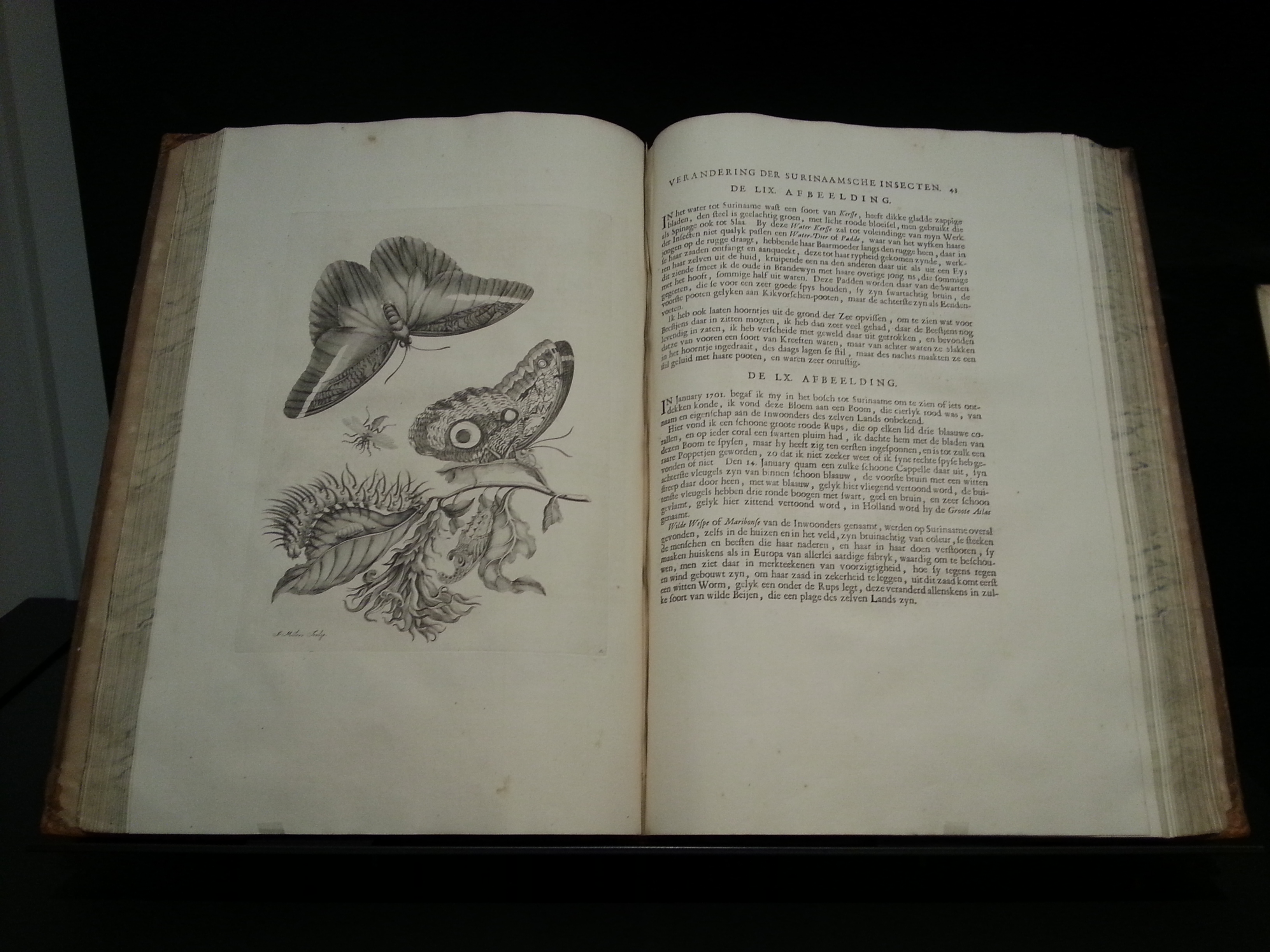
I recently visited Amsterdam, where I came across the work of a German naturalist of whom I had not previously been aware. The Rijksmuseum contains a book that dates back to 1730 and was written by (according to the museum plaque) the “first female entomologist”, Maria Sibylla Merian (1647-1717). The book, entitled De Europische Insecten (available online through the Biodiversity Heritage Library) contains hundreds of illustrations of species made by the author (who also happened to be an extremely talented artist). You can see some of the detailed illustrations from the book at the Sotheby’s auction page for a copy that is for sale (at £25,000-30,000 it’s a bit out of my price range…) and an example of a page below.
A plate from De Europische Insecten
Merian’s story is an interesting one. Born into a famous publishing family, her father passed away when she was three years old. Her mother later married an artist, thus combining the literary and artistic aspects of Merian’s upbringing that would determine her career. She began at the age of 13 by drawing and painting the silk worms that she caught around her home in Frankfurt. As a young female artist, she was a popular tutor for the daughters of local wealthy families and this allowed her to both earn a good living and gain access to influential people (and their extensive gardens with all those wonderful insects!). It was as a result of watching the development of caterpillars into butterflies that she became interested in metamorphosis, and this eventually led to her publication of Metamorphosis insectorum Surinamensium (also available online in its entirety).This volume, drafted by Merian after a two year visit to the Dutch colony of Surinam in South America (which was cut short after she caught malaria), provided European scientists with some of the first full-colour images of the South American flora and fauna. Merian undertook that trip at the age of 52 with her daughter, Dorothea Maria, and documented many new species of Lepidoptera, including all stages of the life cycle and the host plant on which the caterpillar lives – a wonderful resource for naturalists back home. During her visit to Surinam, Merian spoke out against the mistreatment of slaves by Dutch plantation owners and took note of the names that indigenous peoples gave to the species she encountered.
Merian’s work was extremely valuable to Carl Linnaeus, who published in 1735 his Systema Naturae(also available online, but nowhere near as aesthetically appealing at Merian’s work) which laid-out the biological nomenclature that we use today. In particular, the focus on metamorphosis has led to her being listed among the most influential entomologists of all time. Merian was honoured with a Google Doodle to commemorate what would have been her 366th birthday on 3rd April 2013. However, despite all this there is a pretty good chance that Merian died penniless in 1717 a few years after suffering a stroke. But that is all the more reason to appreciate her work today, which is still among some of the most-highly valued and collectable natural history artwork in the world.
The copy of De Europische Insecten in the Rijksmuseum, Amsterdam
One of the biggest problems that teachers face is providing prompt and useful feedback to students. When 200 students all hand in a piece of work at the same time, it can take over a week of solid marking time (9-5 for 5 days) to adequately assess all of those assignments. Meanwhile the students would like to know what they have done wrong and how they can improve, and in an era of immediate communication over a week can feel like a long time! What I will advocate here is a style of feedback that does not replace that in-depth marking, but can be a useful, complementary tool. I suggest that teachers try to use audio or video recording as a way to provide general feedback immediately following an assessment. This doesn’t have to be based on an overview of all the work that has been handed in, but can be indicative of some of the patterns that emerge as teacher works through the assignments.Read More »
Dendrobatid frogs are the classic “aposematic” species: they advertise their toxins with bright colours
I wanted to spend a post talking about a new paper that was published recently (3 May 2013) with some colleagues from Carleton University. It is easy to see the value of tasting bad: predators try to eat you, feel sick, then leave you alone. Even better if you have bright colours or a strong smell (called “aposematic signals”) to go along with it – that way predators can learn to avoid your colours without having to taste you a second time. In fact, they don’t have to taste you at all if other animals of your species also have the bad taste and the bright colours. In theory, this chemical defence should reduce deaths due to predation which means that the prey live longer.Read More »
Presumably as the result of in-depth clinical trials (how else would they know that their treatments can cure so many severe and varied diseases and conditions?) the experts at the Correactology Centres (which I have discussed before) have removed “cancer” from the list of “ailments” that Correactology can treat. A quick scan from an archived version of their “Ailments Treated” page from 4th November 2007 shows 127 ailments, but that list on the current version of the page is only 126. In case you are wondering whether I am serious, I want to be absolutely clear that a PubMed search for “Correactology” produces zero results. The removal of cancer from the list was an edit to the website, rather than a contribution to scientific research. There have been no trials. There are no datasets. There are anecdotes and testimonials that score very low on the evidence pyramid. Nevertheless, Correactologists take money from patients, claiming to be able to treat all kinds of diseases. I will leave you to browse their (wish) list at your leisure, but I wanted to highlight a couple that are particularly unpleasant:Read More »


 Imagine that you are an athlete (more difficult for some of us than for others). You have decided to dedicate your life to your sport and have entered a competition to pit yourself against the best in the country. The trouble is that the sport is poorly defined. You turn up on the day prepared with a full gymnastics routine, but you know right now that the judges prefer figure skating. But gymnastics is your thing and you don’t really know anything about skating, plus you have spent two months preparing this gymnastics routine and you’d hate it all to be for nothing.





 Katatrepsis