Streaming view of Hurricane Sandy in New York

If you want to see what a hurricane looks like as it bears down on a highly populated area, here’s the view from the New York Times office in New York:

There is a webcam set up there which will refresh every 60 seconds as the storm comes in.  Might an interesting spectacle when the storm makes landfall, and a fairly frightening movie when the images are compiled!  Of course, this is a dangerous storm, and I wish all the residents of New York and other affected areas the best of luck.  Be prepared and be safe!

http://www.nytimes.com/interactive/2012/10/28/nyregion/nyt-webcam.html?smid=fb-share

Image credit: MATT ERICSON, JON HUANG/THE NEW YORK TIMES

Via https://twitter.com/nparmalee

Do all species age?

Bill Hamilton (1936-2000)


“…no life schedule, even under the most benign ecology possible, could escape my spectrum of forces of senescence..in the farthest reaches of almost any bizarre universe.”

– Hamilton (1966)

Read More »

Dragonfly intestines: nature’s Swiss Army knife

“We should be extremely cautious in concluding that an organ could not have been formed by transitional gradations of some kind.  Numerous cases could be given amongst the lower animals of the same organ performing at the same time wholly distinct functions; thus in the larva of the dragonfly… the alimentary canal respires, digests and excretes.”

– Charles Darwin, Origin of the Species, Chapter 6Read More »

Why are there imperfect mimics?

A few colleagues and I recently had a paper published in Nature on “A comparative analysis of the evolutionary of imperfect mimicry”. Those of you fortunate to have a Nature subscription can read the paper here.  Alternatively, you can email me and I’ll send you a copy.  Unfortunately, I can’t make the paper available due to issues with copyright from Nature (see elsewhere for details of scientists’ love-hate relationship with publishers…) but I can summarise the paper here.
Read More »

The difference between men and women

I had the pleasure this evening of introducing Prof Root Gorelick to give a lecture to the local Centre for Inquiry group here in Ottawa.  I have seen him give a number of relatively provocative talks at conferences and I knew his engaging style and fascinating subject matter would make for an interesting evening.  Some people have asked me to summarise the talk as they couldn’t make it, so here is my best attempt while it is still fresh in my mind…
Read More »

Clever little Keas…

Intelligence can be defined as the ability to solve novel problems.  In other words, many examples of “animal intelligence” wouldn’t count because of the limited range of situations within which they are able to act.  Examples might include squirrels caching nuts and finding them again or the ability of drongos to mimic the alarm calls of meerkats to scare them off and steal their food.  A true demonstration of intelligence requires that an animal be able to solve a problem with which it has no familiarity.  The kea is an example of an animal that has a remarkable capacity to do just this (h/t Jerry Coyne):

Mantids!

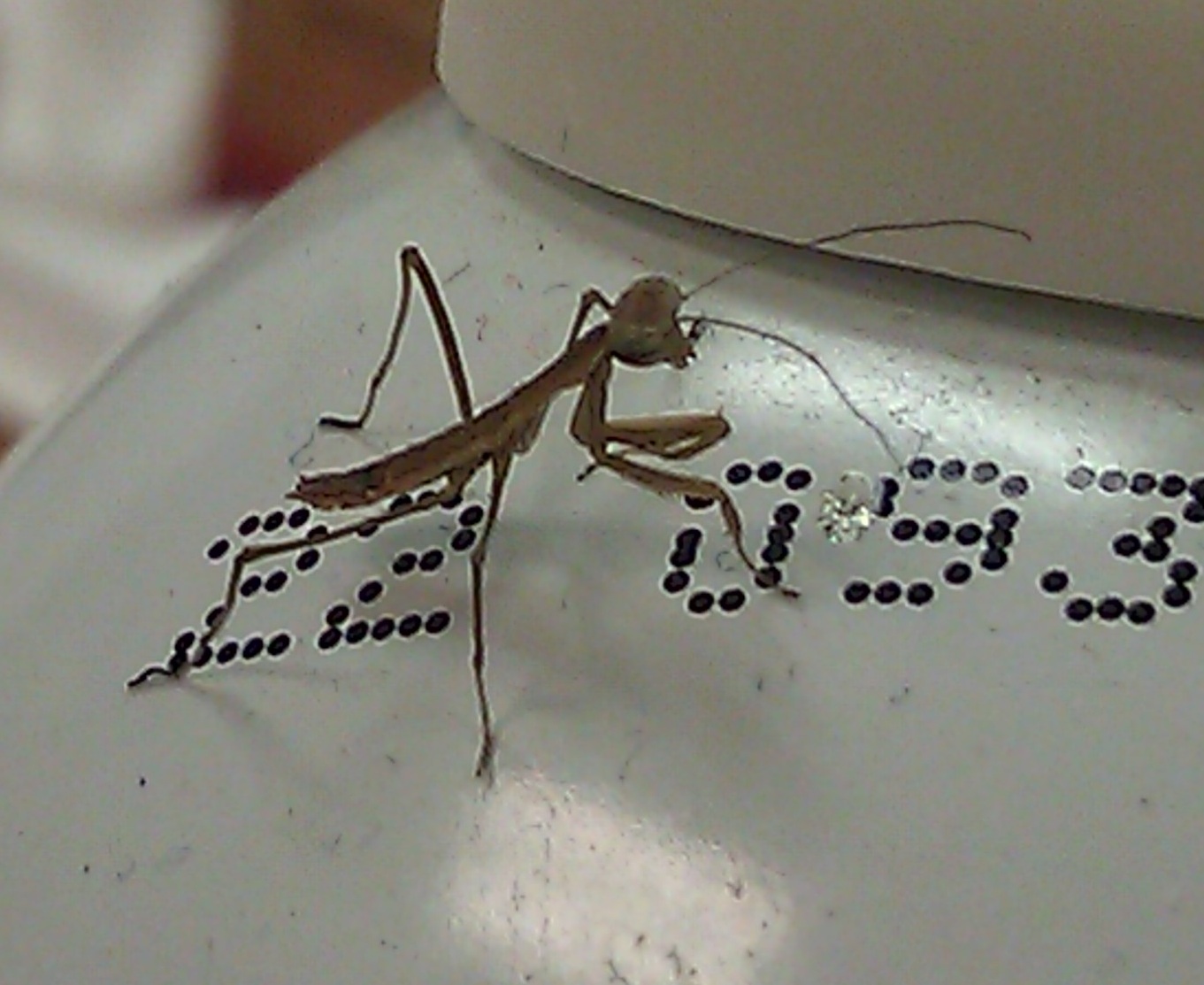
Newly-hatched preying mantis - isn't he cute!?

So our lab ordered some mantids from Home Depot (which don’t seem to be available so I presume it’s a seasonal product) for predation experiments. I was under the impression that they needed specific conditions to hatch that wouldn’t be met until next June. Then someone noticed one crawling over a desk. Sure enough, there were a few dozen wandering aimlessly about, migrating away from the egg case that was sitting in a corner of the lab. I think we got most of them, but those that we didn’t catch should take care of our fruitfly problem!

If you go down to the stormwater management facility today, you’re sure of a big surprise!

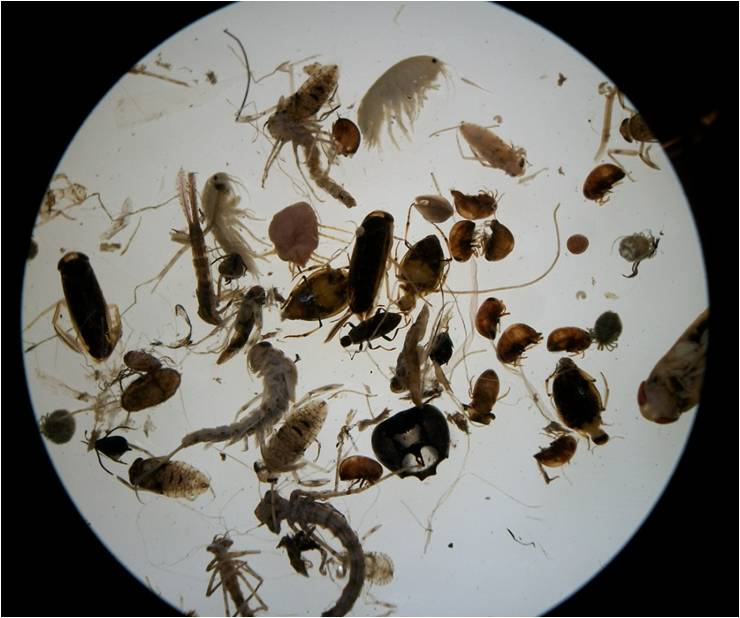
I’ve been neglecting nature in the past few posts, focusing on in-depth (and probably quite dull-looking) reviews of pseudoscientific treatments. Here, I’m going to show some pretty (I think, anyway) photos of some bugs! In a post on the differences between dragonflies and damselflies, I included a couple of photographs that I took while identifying invertebrates from some field samples that I took earlier this year. The project is looking at the biodiversity of stormwater management facilities (SMFs) in Ottawa, Canada. I wasn’t expecting to find much, as these kinds of ponds and small lakes tend to be fairly small, unimpressive and dirty. However, I was pleasantly surprised!

The diversity of invertebrates in Ottawa ponds

Read More »