A new MOOC from Leeds: “Fairness and Nature: When Worlds Collide”

Picture1It’s a pretty exciting time to be teaching in higher education.  There has been a wave of critical evaluation (mostly by the teachers themselves) which has led to a great deal of progress over the past couple of years.  This has led to a recognition that lecture-based courses are not the “be all and end all” of university teaching, and that there are better ways to do things.  Massively Open Online Courses (MOOCs for short) are playing quite a large role in redefining how university teachers engage with their students and how we think about delivering the student experience.

The new MOOC from the University of Leeds is called “Fairness and Nature: When Worlds Collide”, and is being run by Professor Jon Lovett in the School of Geography. Jon is a charismatic and passionate guy with a wide range of experiences in the interaction between people and the nature world, and it is these themes that are explored in the course.  If you want to find out more, head over to the FutureLearn site and sign up (it’s free!).  Here’s a taster:

There are some key characteristics of MOOCs that make them different from conventional university courses:

  • Variable length – MOOCs can be anything from 1 week to 12 weeks, with the breadth and depth of content varying accordingly.
  • Entirely online – with no need to rely on built infrastructure, MOOCs can (and, indeed, do!) cater for tens of thousands of students, rather than the usual hundred or so.
  • Flexible study – because of the online nature, students can participate whenever is convenient for them.  Sometimes this means that students drop-off entirely (completion rates are relatively low) but that isn’t really the point of MOOCs.  MOOCs are frequently designed to provide access to education for as many people as want it, and any learning is a bonus.
  • Flexible structure – the online platform allows a wide variety of multimedia, interactive, connected resources to form the backbone of a course.  These make for a very engaging learning experience.

All these factors combine to make a new and interested way of teaching and engaging a wider range of students, and I look forward to seeing where the MOOC movement goes.

The perils of predictability

Order is a standard part of nature, from the mathematical patterns found in natural structures to the predictable variation in sunrise times at different times of year. Indeed, animals and plants rely on regular, logical ordering of events.  For example, in my work on pollinator ecology bees rely on seasonal patterns in flower blooming as a food source. But this regularity is a double-edged sword: just as a bee can exploit regularity in flowering times, so can birds exploit the regularity in bee occurrence. A shared synchrony of life cycles brings costs and benefits. And this is where we bring in the Greek sea-god Proteus (pictured right). Proteus was a god who was able to change his form to avoid having to tell the future, and he has given his name to “protean” phenomena – those phenomena that are changeable or unpredictable. We can see a potential benefit in the plants altering their timing of flowering (of exhibiting protean flowering patterns) – if they remain predictable then the bees on which they rely for pollination are also predictable, which means that they are easy to exploit as food for birds. However, unpredictable flowering times might result in flowers occurring when there are no pollinators, which would be bad for both groups. Synchrony in the seasonality of flowers, insects, and birds is a complex association between populations (or even communities) of animals, and this makes evolutionary change slow.Read More »

What’s the use of wetlands?

The black bog had him by the feet; the sucking of the ground drew on him, like the thirsty lips of death. […] he tossed his arms to heaven, and they were black to the elbow, and the glare of his eyes was ghastly. […] Scarcely could I turn away, while, joint by joint, he sank from sight.

Lorna Doone, R.D. Blackmore

A view over “Doone Valley”

What do you think of when you think about wetlands: ponds, lakes, streams, rivers? Humankind needs water to drink, irrigate crops, and clean ourselves.  However, our view of water tends to focus on the negatives: drowning, dirt, disease, and decay.  Words like “bogged-down” and “swamped” have entered everyday use. In some ways Carver Doone’s plight represents the fears that we have about wetlands. But I want to make the case that these wetlands are misunderstood heroes of the natural world.
Read More »

Gardens and roofs as nature reserves in cities

I just heard about this brilliant initiative at Sharrow School in Sheffield (less than a mile from the hospital where I was born!).    One of the school buildings has a roof garden which was specifically designed to represent the various habitats that can be found in the local area.  The garden was so successful that the school was able to have it designated as a local nature reserve under UK law.  You can see more details of the school and the building (including the description of the LNR itself and the justification for the designation).  The roof garden was organised by the Green Roof Centre, an organisation based within the University of Sheffield, when building was created in 2007 during the merger of two local schools to form Sharrow School.Read More »

Dead ducks, homosexual necrophilia, and the importance of anecdotes

The wonderful world of anecdotes is often scorned by scientists.  Leading journals demand tightly controlled studies with a priori justifications, and this approach has sidelined some of the more interesting and peculiar aspects of academic.  For example, I have a couple of articles that describe trends through space and time in the presence of dragonflies using databases that were collected by enthusiasts in the field.  These kinds of observations are the bedrock of natural history, for example, where initial anecdotes spur pilots studies which result (if the data is supportive) in fully-fledged grants. Another important anecdote was recorded on 5th June 1995, and it has been immortalised with its own (admittedly slightly niche) holiday.  You can see Dr Kees Moeliker talking about his homosexual necrophiliac mallard here:

The first female entomologist: Maria Sibylla Merian

Maria Sibylla Merian (1647-1717)

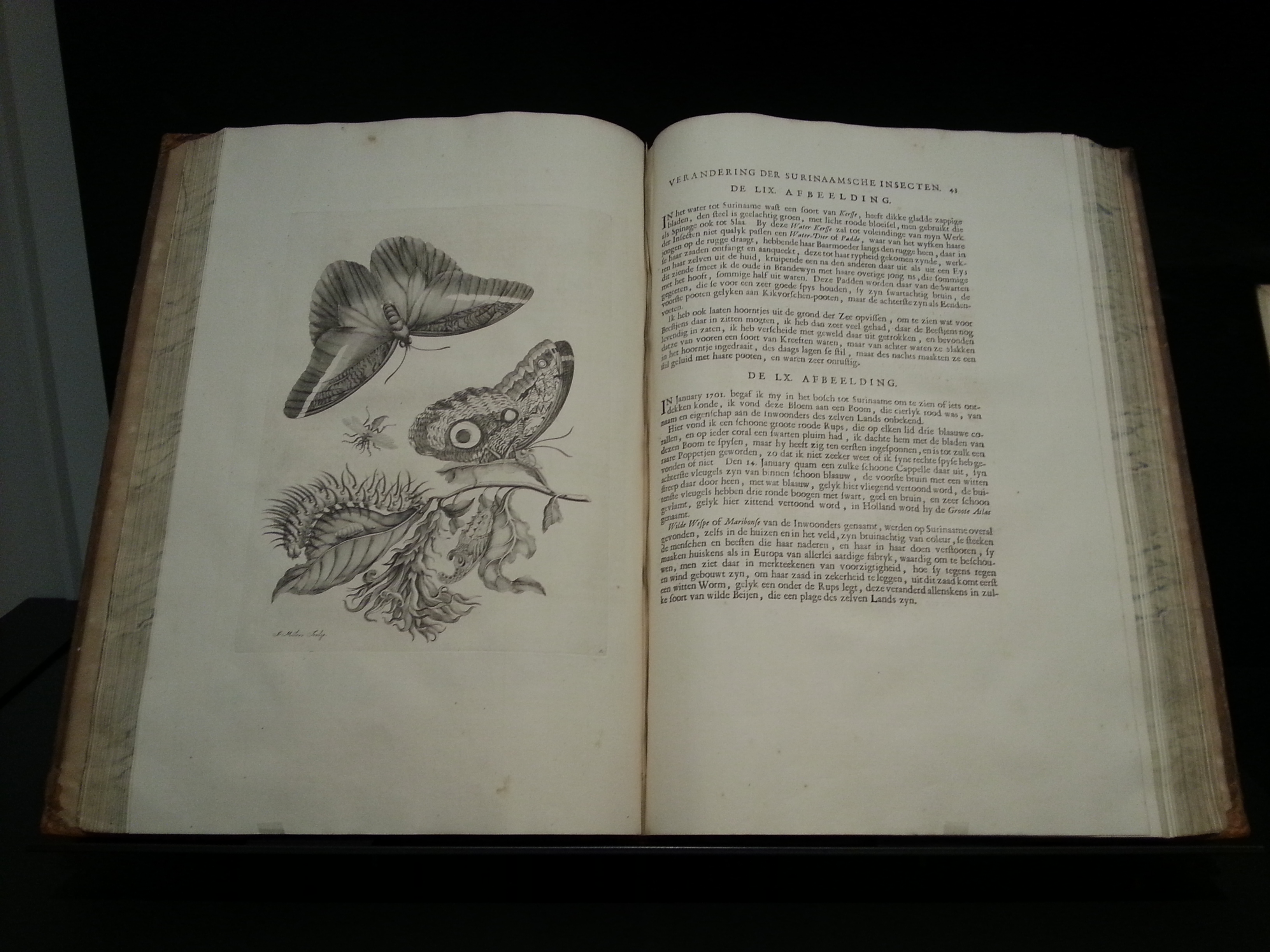
I recently visited Amsterdam, where I came across the work of a German naturalist of whom I had not previously been aware.  The Rijksmuseum contains a book that dates back to 1730 and was written by (according to the museum plaque) the “first female entomologist”, Maria Sibylla Merian (1647-1717). The book, entitled De Europische Insecten (available online through the Biodiversity Heritage Library) contains hundreds of illustrations of species made by the author (who also happened to be an extremely talented artist).  You can see some of the detailed illustrations from the book at the Sotheby’s auction page for a copy that is for sale (at £25,000-30,000 it’s a bit out of my price range…) and an example of a page below.

A plate from De Europische Insecten

Merian’s story is an interesting one.  Born into a famous publishing family, her father passed away when she was three years old.  Her mother later married an artist, thus combining the literary and artistic aspects of Merian’s upbringing that would determine her career.  She began at the age of 13 by drawing and painting the silk worms that she caught around her home in Frankfurt.  As a young female artist, she was a popular tutor for the daughters of local wealthy families and this allowed her to both earn a good living and gain access to influential people (and their extensive gardens with all those wonderful insects!).  It was as a result of watching the development of caterpillars into butterflies that she became interested in metamorphosis, and this eventually led to her publication of Metamorphosis insectorum Surinamensium (also available online in its entirety).  This volume, drafted by Merian after a two year visit to the Dutch colony of Surinam in South America (which was cut short after she caught malaria), provided European scientists with some of the first full-colour images of the South American flora and fauna.  Merian undertook that trip at the age of 52 with her daughter, Dorothea Maria, and documented many new species of Lepidoptera, including all stages of the life cycle and the host plant on which the caterpillar lives – a wonderful resource for naturalists back home.  During her visit to Surinam, Merian spoke out against the mistreatment of slaves by Dutch plantation owners and took note of the names that indigenous peoples gave to the species she encountered.

Merian’s work was extremely valuable to Carl Linnaeus, who published in 1735 his Systema Naturae (also available online, but nowhere near as aesthetically appealing at Merian’s work) which laid-out the biological nomenclature that we use today.  In particular, the focus on metamorphosis has led to her being listed among the most influential entomologists of all time.  Merian was honoured with a Google Doodle to commemorate what would have been her 366th birthday on 3rd April 2013.  However, despite all this there is a pretty good chance that Merian died penniless in 1717 a few years after suffering a stroke.  But that is all the more reason to appreciate her work today, which is still among some of the most-highly valued and collectable natural history artwork in the world.

2013-05-03 16.15.00
The copy of De Europische Insecten in the Rijksmuseum, Amsterdam

Species with a chemical defence (but not a chemical offence) live longer

Dendrobatid frogs are the classic “aposematic” species: they advertise their toxins with bright colours

I wanted to spend a post talking about a new paper that was published recently (3 May 2013) with some colleagues from Carleton University.  It is easy to see the value of tasting bad: predators try to eat you, feel sick, then leave you alone.  Even better if you have bright colours or a strong smell (called “aposematic signals”) to go along with it – that way predators can learn to avoid your colours without having to taste you a second time.  In fact, they don’t have to taste you at all if other animals of your species also have the bad taste and the bright colours.  In theory, this chemical defence should reduce deaths due to predation which means that the prey live longer.Read More »

Our Skeptical Inquirer article has been published!

20130428_001544

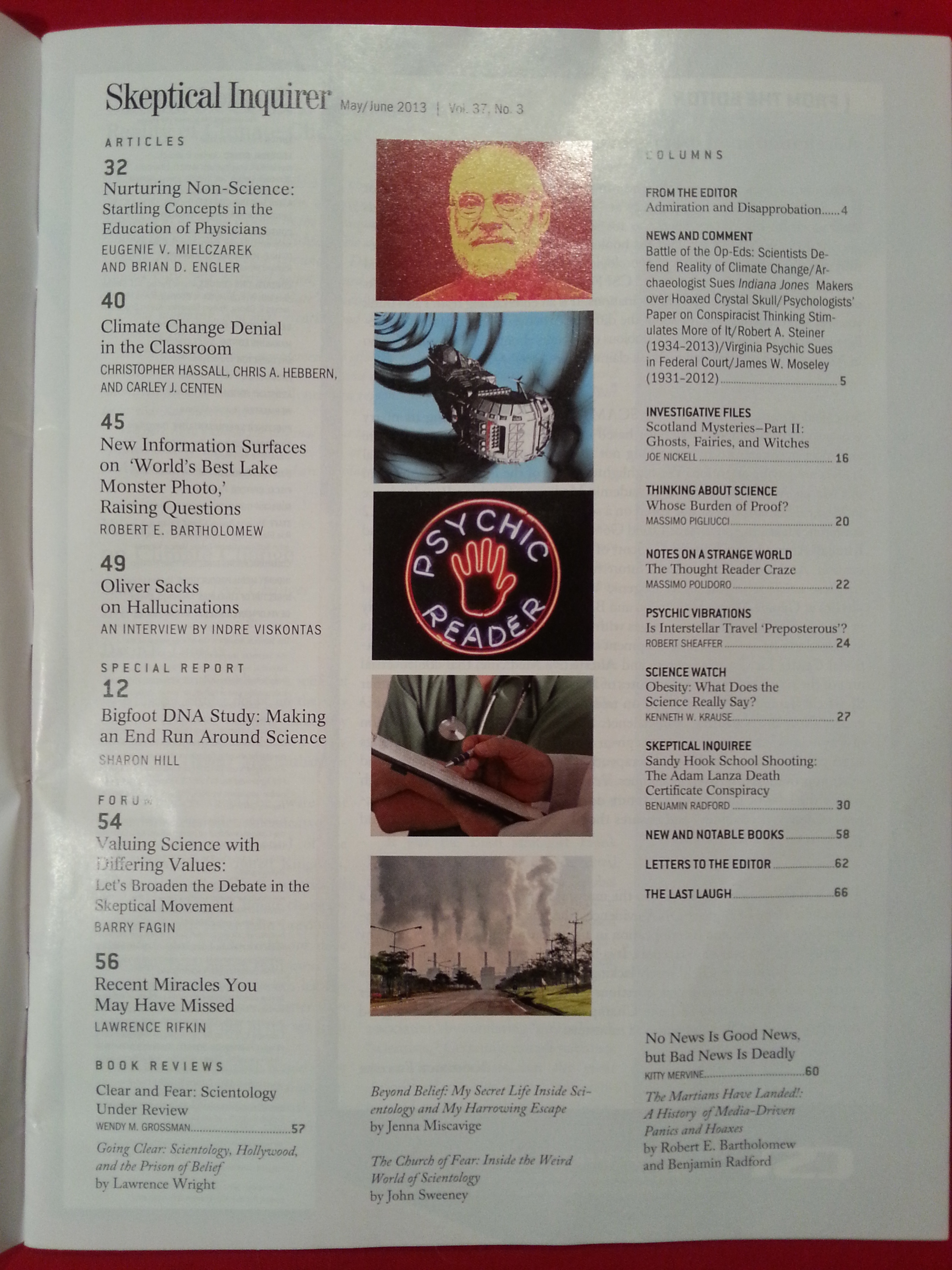
The Skeptical Inquirer piece on climate change denial in universities that I wrote (along with my co-conspirators) has just been published in the May/June 2013 print edition!  It’s a bit strange to be listed alongside people like Ben Radford, Sharon Hill, Joe Nickell, Massimo Pigliucci and Massimo Polidoro, but we’re all delighted that Ken Frazier and the rest of the SI team saw enough value to accept our little piece.  Many thanks to them all for a smooth and efficient editorial process.  I’m afraid that there’s no online version yet (they don’t publish all the print articles online, and those that they do publish online come along a month or two after the print edition) but I’ll post a link if/when it does appear.  All the more reason to go and subscribe to the print version!

Leeds Big Data Week (big data for conservation biology)

I’m excited to be a part of Big Data Week this year. For those of you who aren’t familiar with the phenomenon of big data, IBM has a pretty good definition.  In essence, we are collecting huge amounts of data by virtue of living in a technologically advanced world, and those data are collected rapidly in a diverse range of formats. The challenge now is what to do with all of it! Big Data Week, which is running from 22-28 April 2013, is an international movement that was established in 2011 to connect businesses, data scientists, and technology groups to explore novel social, political, technological and commercial applications of big data.  Leeds Data Thing is my local big data group, formed in 2013 to provide a venue for the discussion of local big data applications.  They are putting on a range of events for BDW 2013, and I have volunteered to give a short presentation at one of those events.

Read More »

Launch of a new project: the West Yorkshire Ponds Project (WYPP)

I feel that I should demote myself from “blogger” to “occasional blogger”…  But I have an excuse!  Exciting things are happening, and I have been involved in some new projects which have taken up a considerable amount of time.  Aside from a massive EU grant application (which has taken an inordinate amount of time to produce 25,000 words), I have also been finalising the launch of the West Yorkshire Ponds Project (WYPP, click the image to go to the page):

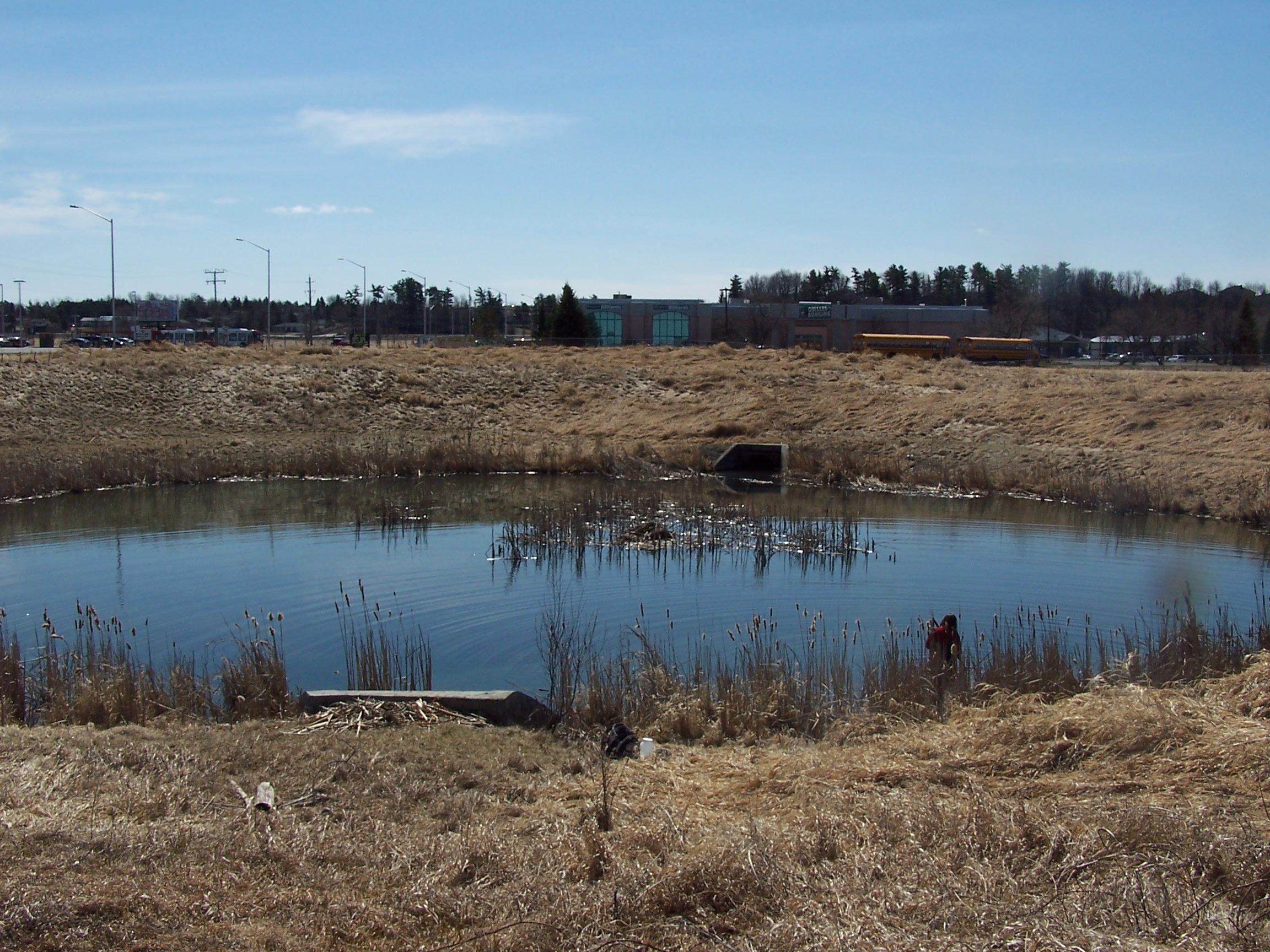
WYPP is the beginning of a new research project that I have had in the pipeline for some time.  The aim is to spread knowledge about the value of urban wetlands (focusing on the West Yorkshire region for now) while seeking collaborations with which to advance that knowledge.  Feel free to browse around the www.wypp.org site to find out more about the value of ponds (flood prevention, pollution reduction, biodiversity enhancement), and how school ponds can bring nature within reach of the most inner-city of schools.

I’d appreciate feedback or comments on the site, and I’d love to hear from anyone in the West Yorkshire area who might be interested in working with me on this project.  It is going to be very community-oriented so the more the merrier!