Student blogging

I don’t get many readers, but some people do find my blog and that has led to over 70k views for the past few years. I’m quite pleased with that, and it gives me the encouragement to carry on through the dry spells. However, I remember starting out and not knowing who would ever read (or even find) my blog. Now I have students who are setting out into the blogosphere and writing great material so I thought I would do my bit to send some traffic their way. Here is a quick list of their blogs, vlogs, radio shows and documentaries that I have come across recently:

EcoSapienLogo

EcoSapien – my former student David has been busy working on a number of projects. EcoSapien is a YouTube show dedicated to spreading awareness about conservation and biodiversity, as well as providing resources for teachers to educate school pupils about wildlife.

North Ronaldsay Logo

North Ronaldsay – David was also the mastermind behind a three-part documentary on the Orkney Island of North Ronaldsay. The show covers the history, wildlife, and people of the island with some beautiful nature shots.

Eye On Wildlife Logo

Eye on Wildlife – Emma produces blogs and podcasts focused on wildlife biology and biological conservation. You can also see her talking about How the Internet Can End Global Poverty, from the University of Leeds TEDx event in November 2014 (video should be available here soon).

Simon the Scientist Logo

Simon the Scientist – a mixture of science writing looking at a wide range of (pretty diverse!) topics.
Screen Shot 2014-12-01 at 08.16.42

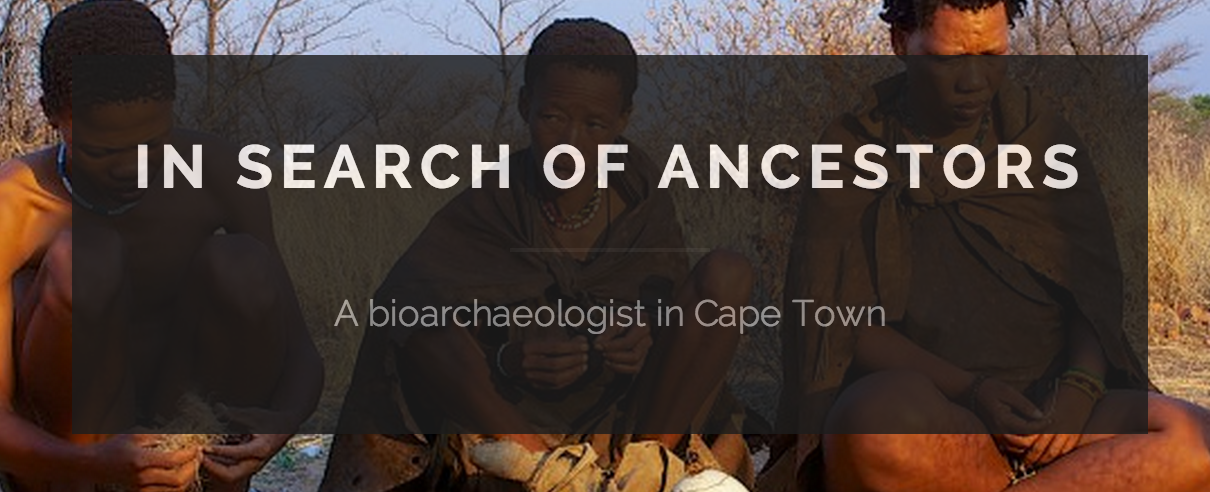
In Search of Ancestors – Simon (a different Simon, just to confuse us) is currently – at the time of writing – working as a field assistant in South Africa working on a fossil hominid project. This blog catalogues his ideas on hominid evolution.

Roaming Researcher Logo

The Roaming Researcher – Dan and I worked together on his MSc dissertation project. Since finishing his MSc, Dan has been travelling the world working on a wide range of field projects and shares his experiences on his blog.

Weekly Wildlife Watch Logo

Weekly Wildlife Watch – Tania and Gabriella have been running a student radio show on wildlife ecology and conservation for some time and have managed to get some fascinating folk in for interviews. Go listen and share!

If I have missed anybody then please do let me know and I am happy to update!

A defense of “denial” and “debate” on climate change

LeedsSkepticsTalkI gave a talk at the Leeds Skeptics last night – part of a mini-tour talking about “Denying the Evidence: Why People Reject Science and What We Can Do About It“. During the Q&A I was asked whether using the term “denier” was an attempt to shut down the debate over climate change. These are two interesting issues which I’ll take one at a time.Read More »

Who would win in a fight between a rhino and a tiger?

tigerrhinoI got an email from our university press officer earlier this week asking “whether we have a ‘zoologist who could participate in a light-hearted discussion about who would win in a fight between a tiger and a rhino on Friday morning’.” The request was from the local BBC Radio Leeds team who wanted to break up their coverage of the Leeds Rhinos vs Castleford Tigers rugby league Challenge Cup final preparations with some light-hearted digressions. I have resolved to take a more active part in science communication (including this blog), because I see that as a fundamental part of my job (even if it is little-rewarded…) and so I agreed to do it.Read More »

Why I blog (occasionally!)

There has been a lot of discussion over the merits of academics blogging (see here, here, here, here, here and here). The positive arguments seem to be that:

  1. It’s good outreach, allowing a flexible platform for communication of science
  2. Blogs allow rapid responses and reporting on research
  3. Online profiles are important and blogs can be a strong foothold in internet-space
  4. Writing for a non-technical audience is good practice for science communication

The negative arguments seem to be that:

  1. It doesn’t count in academic terms (it’s not a paper, a grant, or a lecture)
  2. Sometimes tenure panels might see blogging as a waste of time
  3. There’s the danger of “upsetting” people.

Well I think it counts (even if my colleagues disagree), we don’t have tenure in the UK, and I don’t mind upsetting people, so there’s no good reason for me not to blog! I was letting it drop off a bit, but all this discussion has encouraged me to start up again. One of the problems is that I lacked a blogging strategy, which meant that I only shared what I (A) found interesting, and (B) found time to write about. Most of my problem was that I found interesting topics and spent too much time on too few, too niche issues. That’s going to change. Here’s the plan:

  • I’m going to post lay summaries of each of my publications.  That’s 25 to start with, and I’ll add more as I go along. I see that as a vital part of science communication, and I’ll link them back to my publications page on my website.
  • I have recently been immersing myself in Twitter which has led to my discovering a lot more interesting (and sometimes plain weird) papers and articles. This will be a key (near-bottomless) source for new ideas, but I’ll try to keep to a theme.
  • The main topicsare going to be
    • General science things
    • Entomology news and views
    • Education and technology
    • Specific posts about my research
  • Finally, I’m going to write in short form now – no more monthly long reads. 500 words max, and always with an image or video. It was the length and detail that was killing my productivity, and nobody reads those longreads, anyway!

I am hoping that that is going to provide a sustainable flow of content over the next few months, and I’ll reevaluate at Christmas.  Happy reading!


Image credit: Cortega9, CC-BY-SA 3.0, http://bit.ly/1oiVIwr

Be sensible about open access, but it’s still a good thing!

In a recent paper published in Trends in Plant Science, Anurag Angrawal presents a few “reasons to be skeptical of open-access publishing” (Angarwal, 2014) in order to stimulate debate over the current open access (OA) publishing model. Ironically this is behind a paywall so I thought I would summarise the content, which is more reasonable than the title suggests. Here is the gist of the four problems:Read More »

iPad apps for academics (Part 2)

I wrote earlier about a few apps that I had found useful in my first weeks of owning an iPad. Well I’ve been actively pursuing opportunities to learn more about the learning applications for tablets like the iPad and wanted to share some of what I have found. A lot of this comes from a workshop by the brilliant Joe Moretti, who came to my university to run a workshop on iPads in education. I hope these are useful to you, too:Read More »

Flipping the classroom – how to make lectures engaging and interactive

I’ve been taking a teaching course that requires me to change the way that I teach to explore new techniques. At first it seemed like it was going to be a lot of effort, but it turned out to be a fascinating and enjoyable experience.  I was experimenting with a type of teaching called the “flipped [or inverted] classroom“.  Here’s how it works:

Flipped vs traditional teaching models

Read More »

Funding for academic outreach in biology (and other sciences)

I recently heard a keynote talk by Sophie Duncan, the Deputy Director of the National Co-ordinating Centre for Public Engagement, and was really impressed by her enthusiasm for embedding outreach and engagement at every stage of research. Sophie pointed out that there are a number of problems with public engagement as it stands:

  1. There can be a lack of support and reward for good engagement within departments.
  2. Outreach tends to be centred on the academic, rather than on the public.
  3. Groups outside of academia tend not to pro-actively seek academic collaborators.Read More »

Peer instruction – interactive teaching in a large lecture class

I attended a webinar before Christmas that was hosted by Eric Mazur, a well-known Harvard physics professor.  Setting aside how exciting it was to have a guest speaker talking live and taking questions from his office in the US, the subject of his talk was really fascinating.  Mazur has developed a series of techniques that can change the way we teach and here he was discussing “peer instruction”.Read More »